
How to stream Popcorn Time on Roku via screen mirroring
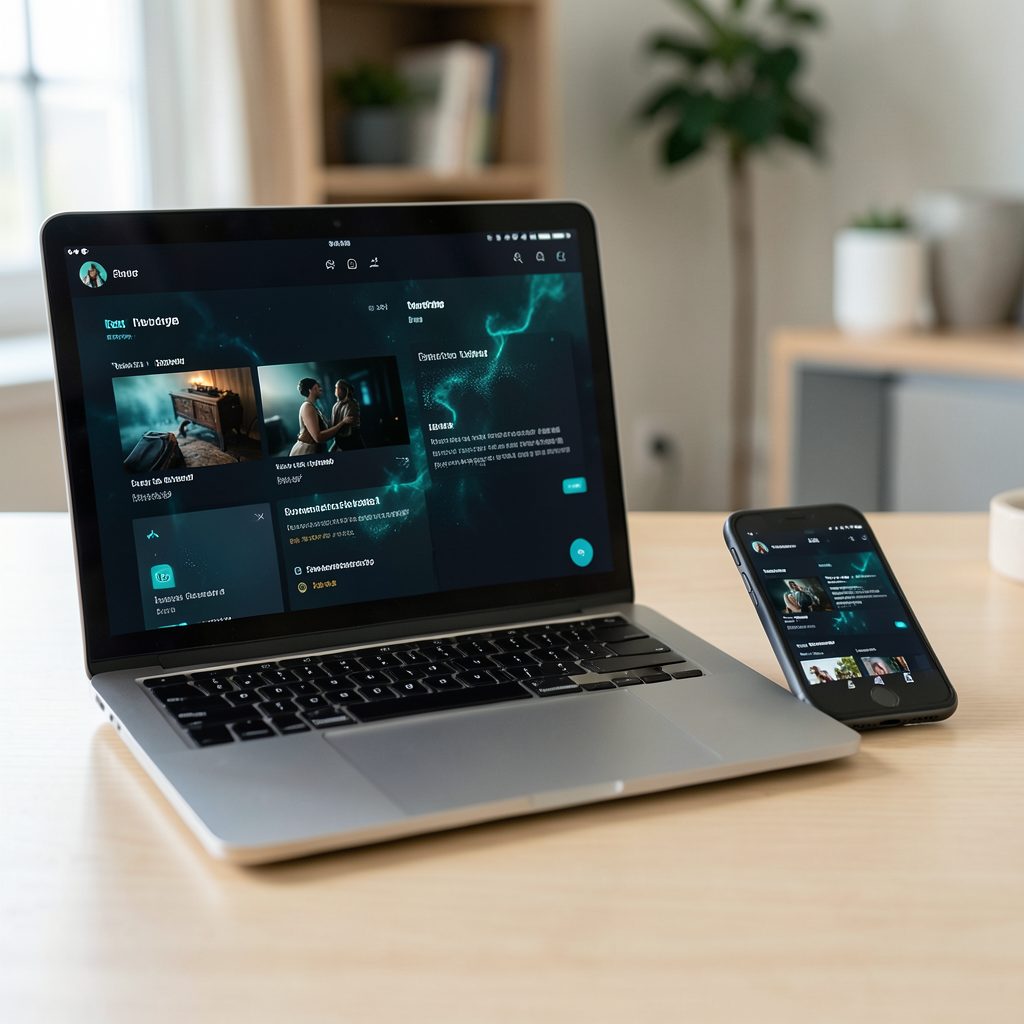
Popcorn Time arrived in the early 2010s as a streaming app that pulls its catalogue from peer-to-peer sources, letting users watch films and series without downloading files manually. It runs on Windows, macOS, Linux, Android, and select iOS devices. Roku sits behind millions of living-room televisions across Australia, from suburban homes in Brisbane and Adelaide to inner-city apartments in Melbourne. The two products were never designed to talk to each other directly, but with Roku's built-in screen mirroring feature, you can push whatever plays on Popcorn Time straight to the big display.
Screen mirroring replicates everything on your phone, tablet, or computer onto your television in real time. Unlike a Chromecast, which pulls media directly from a cloud source, mirroring sends a live copy of your device's display. That distinction matters because Popcorn Time does not expose a clean cast-friendly signal by default, so you rely on the operating system to do the heavy lifting.
Australians who travel between states encounter slightly varied Roku firmware versions, but the mirroring workflow stays consistent. Whether you live in Perth on an iiNet connection or in Sydney with Telstra fibre, the basic steps are identical. The variables that change the experience are bandwidth, router quality, and the device you mirror from.
It helps to understand the difference between screen mirroring and AirPlay. Apple's protocol sends encoded video data between devices, while standard screen mirroring transmits raw pixels. The choice depends on which device you mirror from and how much bandwidth you want to share across your home network.
Preparing your Roku device for mirroring
Roku devices ship with mirroring enabled out of the box on most models, including the Roku Express, Streaming Stick 4K, and Ultra. However, the feature is sometimes disabled after a software update or factory reset. To confirm, head to Settings, then System, then Screen Mirroring, and choose either Prompt or Always Allow. Selecting Prompt means your Roku will ask you to confirm every new mirroring request, which adds a step but prevents random devices in the building from hijacking your screen.
The protocol Roku uses on Windows and Android devices is Miracast, a Wi-Fi Direct standard that does not require both devices to share the same router. Miracast is supported by most Android phones sold in Australia since 2018 and by Windows 10 and 11 laptops. The catch is that it struggles with content above 1080p and can be sensitive to network congestion during peak evening hours between 7 pm and 10 pm AEST.
If you own a 4K Roku, Miracast will downscale to 1080p. This is fine for most films in Popcorn Time's catalogue, but those streaming high-bitrate remuxes will notice the drop in clarity. Audio is also compressed during mirroring, so Dolby tracks arrive as stereo unless your Roku is connected to a home theatre system that decodes the signal from the HDMI output.
Mirroring from Windows, macOS, Android, and iPhone
On Windows 10 or 11, press Win+K to open the Connect panel, then select your Roku from the list. The first connection usually takes ten to fifteen seconds while the two devices negotiate. After that, launch Popcorn Time on your laptop and start playback. The image appears on your television with a slight delay of roughly half a second, which is normal for Miracast.
For macOS users, the path is less direct because Apple does not natively support Miracast. The most reliable workaround is a third-party app such as AirBeamTV or LonelyScreen to emulate an AirPlay receiver. Once configured, your Mac sees the Roku as a destination, and Popcorn Time mirrors cleanly to the screen. iPhone users follow a similar pattern using the Screen Mirroring toggle in Control Center, which pairs naturally with Apple TV AirPlay workflows if you later upgrade to an Apple TV.
Android owners have the smoothest experience. Pull down the notification shade, tap Cast or Smart View depending on your manufacturer, and choose the Roku. Samsung Galaxy devices sold through Australian carriers like Telstra and Optus all support this, as do Pixel phones and recent Motorola models. The connection is stable, and audio sync issues are rare unless the phone is more than five metres from the Roku.
Curating watchlists with bookmarks and favourites
Once mirroring is running smoothly, the next step is curating what you actually want to watch. Popcorn Time offers a built-in favourites system that lets you mark titles for later viewing, and the app remembers where you stopped playback so you can resume across sessions. Learning how to manage bookmarks and favourites inside the interface makes a noticeable difference when juggling several series at once.
The favourites list is accessible from the left-hand sidebar on desktop builds and from the main menu on Android. Each entry shows the poster, year, and a small heart icon to remove it from your list. Bookmarks function more like episode markers inside a series, handy for binge-watchers who want to skip a recap or jump straight to a particular scene after pausing overnight.
A common frustration is that bookmarks do not sync between devices. If you bookmark an episode on your laptop in Perth, the marker will not appear on your phone in Brisbane. This is one of the limitations of Popcorn Time's torrent-based architecture, which stores user data locally rather than in the cloud. Periodically cleaning out old entries keeps the catalogue manageable.
Network performance on Australian home connections
Australian broadband infrastructure is dominated by the National Broadband Network, which delivers a mix of fibre-to-the-premises, fibre-to-the-node, and hybrid fibre-coaxial connections depending on the address. Speeds range from a sluggish 25 Mbps in older NBN areas to gigabit connections in newer suburbs like parts of Brisbane's North Lakes or Sydney's Kellyville. Popcorn Time requires a steady 5 to 10 Mbps per stream, so most Australian connections handle a single mirrored session comfortably.
Geographic location also matters. If you live in regional areas around Townsville or Wagga Wagga, your connection might be on a slower NBN tier or even on a wireless broadband service from a provider like Starlink or Optus 5G Home. These connections work but introduce variable latency that can affect the smoothness of mirroring. Keeping the router within line of sight helps reduce dropouts.
Older Australian ISP-supplied routers, like the TP-Link and Netgear models issued by TPG and Aussie Broadband, sometimes run hot during long streaming sessions. Restarting the router weekly clears memory leaks that build up over time, and repositioning it away from microwaves and other 2.4 GHz devices reduces interference during evening viewing.
Practical reference lists for streamers
Two quick lists help once mirroring is set up. The first covers device requirements, while the second lists habits that keep the experience smooth week after week. Keep this cheat sheet handy whenever you set up a new device or hand the remote to a family member who has not used mirroring before.
Devices that mirror reliably to most Roku models:
- Windows 10 or 11 laptops with Miracast support, covering most machines sold in Australian retail since 2018
- Android phones running version 8.0 or later, including Samsung Galaxy handsets purchased through Telstra, Optus, or Vodafone
- iPhones and iPads using iOS 12 or newer with the Screen Mirroring toggle in Control Center
- Macs running macOS 10.13 or later paired with AirPlay-emulation software for Miracast-free environments
Weekly habits that keep mirroring sessions stable:
- Restart the router every Sunday evening to clear cached sessions from ISP-supplied firmware
- Update the Roku firmware when prompted, since newer builds often include mirroring stability fixes
- Keep the mirroring device plugged in during long sessions to avoid sudden stream dropouts from battery saver triggers
- Clear the Popcorn Time cache once a month to prevent the catalogue from loading slowly after weeks of accumulated metadata
These lists assume a typical Australian home setup with consumer-grade NBN and a standard router. Households with mesh systems like Google Nest Wifi or Netgear Orbi already have most reliability covered, so the lists apply more to single-router configurations.
Copyright law and streamer awareness in Australia
Australia's copyright framework is administered by the Australian Copyright Act 1968, with enforcement handled by the federal court and agencies such as the Australian Communications and Media Authority. The law makes it illegal to distribute copyrighted material without permission, and recent amendments have expanded the scope to include stream-ripping services. The legal position for viewers who merely watch streamed content is murkier, with no Australian case to date prosecuting an individual consumer for personal viewing of unlicensed streams.
Australian ISPs are required to retain metadata under data retention laws, meaning your download and viewing activity is logged for at least two years. Rights holders occasionally send infringement notices to ISPs, who forward them to customers, though such notices are rare for streaming-only behaviour. Using a VPN is a common workaround for those wanting to mask their activity, but VPNs remain fully legal in Australia.
The Australian market has seen substantial growth in paid streaming since Netflix launched locally in 2015. Stan, owned by Nine Entertainment, and Disney+ have captured large subscriber bases, while Foxtel Now serves households wanting live sport. Roku owners also access major local apps including ABC iview, SBS On Demand, 7plus, and 10 Play, broadcasting free catch-up content from Australia's public broadcasters.
Set up screen mirroring on your Roku tonight and try Popcorn Time across the living-room display. The whole process takes less than fifteen minutes, and you can always revert the settings if mirroring turns out not to suit your household.
For anyone serious about building a long-term viewing queue, spend a few minutes exploring the built-in favourites system before adding titles to your list. You'll spend less time hunting for something to watch when you finally sit down.