
How to Stream Popcorn Time on an LG WebOS TV
Popcorn Time is generally designed for Windows, macOS, Android, or other platforms rather than LG’s webOS operating system. That means an LG television usually cannot install the desktop application directly from the webOS Content Store. The practical approach is to run the software on a computer or phone and send the picture and sound to the TV.
There are several ways to do this in an Australian lounge room. An HDMI cable gives the most dependable result, while Chromecast, AirPlay, and wireless screen mirroring can be more convenient when the television and source device are on the same home network. Your exact options depend on the LG model, operating system version, phone, and Popcorn Time fork.
Streaming copyrighted material through torrent-based software may breach Australian copyright law when you do not have permission to access or share it. Use the setup guidance with content you are legally entitled to watch, and check the terms that apply to your chosen service. A VPN can improve privacy on a public or shared network, but it does not make unauthorised streaming lawful.
Network performance also matters. A busy NBN connection, an older Wi-Fi router, or a television positioned several rooms away may cause buffering. In a typical Melbourne, Brisbane, or Perth home, a wired computer connection combined with HDMI is often smoother than trying to push high-bitrate video across congested Wi-Fi.
Check Your LG TV And Source Device
First, identify whether your LG television supports the features you want to use. Recent webOS models commonly include AirPlay 2, and many work with Google Cast through a separate Chromecast device or a compatible streaming accessory. Some models support screen sharing from Android phones, although menus and names differ between LG generations.
Open the LG Home dashboard and look for AirPlay, Screen Share, or connection settings. You can also check the model number in Settings and compare it with LG’s Australian support documentation. If the television lacks wireless casting, it can still display Popcorn Time from a PC through HDMI.
The source device needs to run a compatible and trustworthy version of the application. Forks can differ in their interface, codec support, subtitle handling, and casting features. Avoid installers from unknown download pages, scan files before opening them, and keep Windows, macOS, Android, or iOS updated. The latest Popcorn Time news can help you track changes across forks, releases, and platform support.
Before starting playback, test a legitimate local video or another approved streaming app. This separates a TV, cable, or network fault from an issue inside Popcorn Time. It is also worth checking that the LG television is set to the correct HDMI input or that the phone and TV appear on the same Wi-Fi network.
Use HDMI From A Windows PC Or Mac
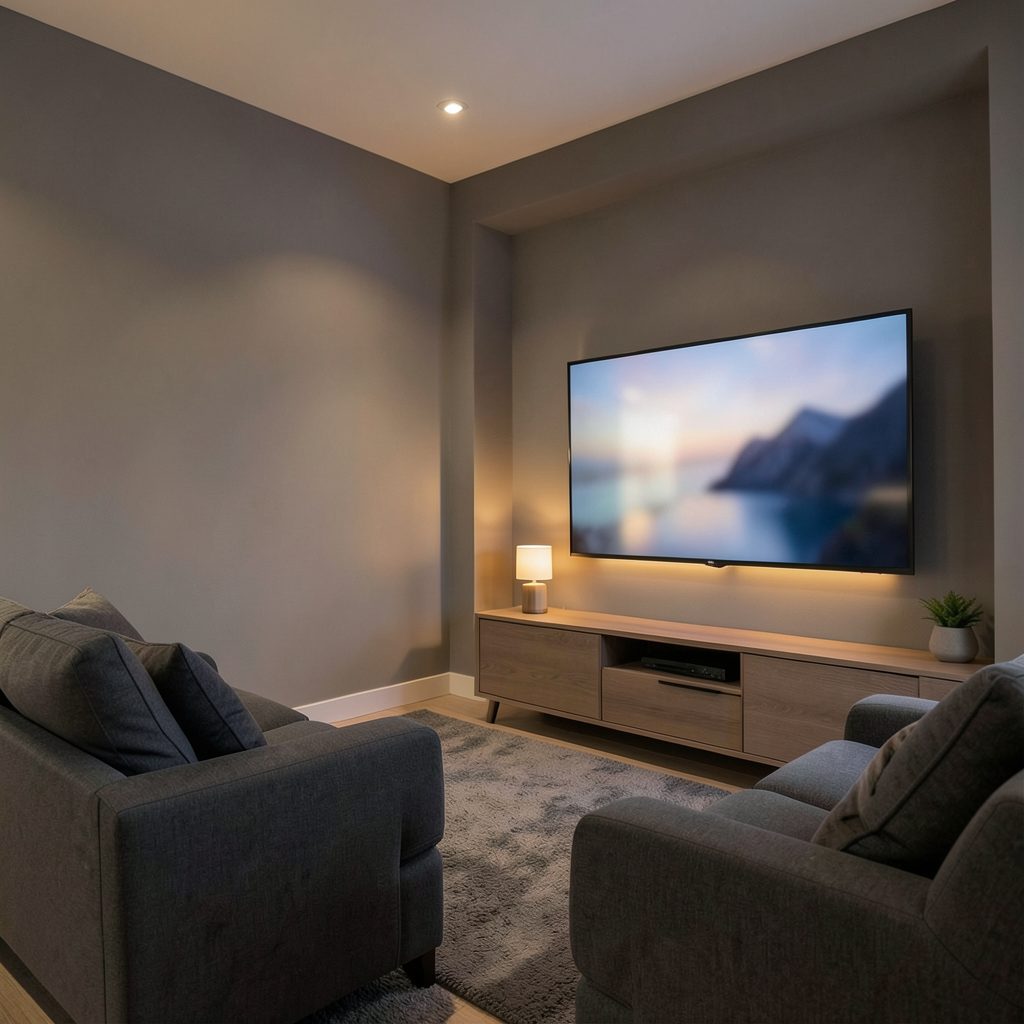
HDMI is usually the simplest method for a computer. Connect the PC or Mac to an available HDMI port on the LG TV, select that input with the remote, and start the application on the computer. The television acts as a large external display, so the stream does not need to be natively supported by webOS.
On Windows, press Windows + P and choose Duplicate if you want the same image on both screens, or Second screen only if you plan to use the TV as the main display. On macOS, open System Settings, select Displays, and arrange or mirror the screens. Set the LG display to its native resolution where possible, then choose a refresh rate supported by both devices.
For sound, select the LG TV or HDMI output in the computer’s audio settings. If the picture appears but the sound stays on the laptop, this is usually an output-selection issue rather than a Popcorn Time problem. A short, good-quality HDMI cable is preferable; very long or damaged cables can cause flickering, dropouts, or an intermittent signal.
This setup works well for a family movie night, especially when the computer is near the TV. It also avoids limitations in webOS browsers and casting protocols. If your MacBook or Windows laptop has only USB-C, use a compatible USB-C-to-HDMI adapter rather than relying on an unreliable wireless connection.
Cast From An Android Phone
Android phones can often mirror their screens to an LG television through Screen Share, Miracast, or a similar feature. Open the phone’s quick settings and look for Cast, Smart View, Screen Cast, or Wireless Display. The wording varies between Samsung, Google Pixel, Motorola, and Oppo devices.
If the LG TV appears, select it and approve the connection on the television. Start playback on the phone only after the mirror session is active. Rotate the phone to landscape mode, enable full-screen playback, and keep the phone awake. A strong 5 GHz Wi-Fi connection is helpful when the TV and handset are close to the router.
A separate Chromecast provides another route. Plug it into the LG’s HDMI port, complete setup in the Google Home app, and use the Cast icon where the application supports Google Cast. If the app does not offer a cast button, Android’s full-screen mirroring function may still work, although it can introduce more delay and reduce image quality.
Mobile streaming can consume substantial data. Many Australian households now have generous NBN plans, but a phone using a mobile hotspot may run through its allowance quickly, particularly with HD or 4K video. Telstra, Optus, and Vodafone plans can apply speed limits after a data threshold, so check the allowance before using a handset as the home connection.
Stream From An iPhone Or Mac
AirPlay is the most convenient option when you use an iPhone, iPad, or Mac and the LG television supports AirPlay 2. Connect both devices to the same Wi-Fi network, open Control Centre on the iPhone or iPad, and select Screen Mirroring. Choose the LG TV, enter the displayed code if requested, and then open the video application.
Some apps can send a video directly through an AirPlay button, while others only mirror the whole device screen. Direct AirPlay is generally cleaner because the phone can act as a controller. Screen mirroring is more widely compatible, but notifications, incoming calls, and orientation changes may appear on the TV.
On a Mac, use the Control Centre in the menu bar, select Screen Mirroring, and choose the LG television. If AirPlay is missing, confirm that the TV has AirPlay enabled and that both devices are on the same network. Guest Wi-Fi, VPN split-tunnelling, and router isolation can prevent devices from discovering one another.
Older LG models may not include AirPlay. In that case, a wired adapter from the iPhone or iPad to HDMI, a Mac HDMI connection, or an Apple TV device can provide a more stable alternative. Apple’s App Store rules and the availability of Popcorn Time forks also mean that iPhone support is less consistent than Android or desktop support.
Fix Buffering, Sound, And Casting Problems
Start troubleshooting by reducing the number of variables. Close unused apps on the computer or phone, pause other downloads, restart the router, and reboot the TV. If possible, connect the PC to the router by Ethernet. A wired link is especially useful in apartments around Sydney or Melbourne where neighbouring networks can crowd the 2.4 GHz spectrum.
If wireless playback stutters, move the router closer to the television or switch compatible devices to 5 GHz Wi-Fi. Avoid placing the router inside a cabinet or behind the TV. Lowering the playback resolution can help on a modest NBN connection, while subtitles may need to be selected again after changing the output method.
A black screen with audio can indicate unsupported hardware acceleration, an HDCP problem, or a browser and app compatibility issue. Test another video source through the same HDMI port. If that source also fails, change the cable or HDMI input. If only one application fails, update or reinstall that application rather than changing the entire TV setup.
For users comparing television platforms, the workflow is similar on other smart-TV systems. The guide to streaming on a TCL Roku TV explains the same general principle: run the service on a supported device and use an external display or casting path when the TV platform has no native application.
Use a VPN only for a legitimate privacy purpose, such as protecting traffic on public Wi-Fi or limiting exposure to your internet provider. Choose a reputable provider, understand its logging policy, and remember that VPN use can reduce speed or interfere with casting because the phone, computer, and television may appear on different networks. Turn off split tunnelling or allow local-network access when necessary, then confirm that your viewing activity is authorised.
Connect the PC with HDMI when reliability matters, or use AirPlay, Android mirroring, or Chromecast when convenience matters more. Keep the TV firmware and source device current, use a stable home network, and verify the copyright status of every film or programme before pressing play. For Australian households, that combination offers the clearest path from a computer or phone to an LG webOS screen without depending on an unsupported TV installation.