

How Popcorn Time Forks Changed Torrent Streaming
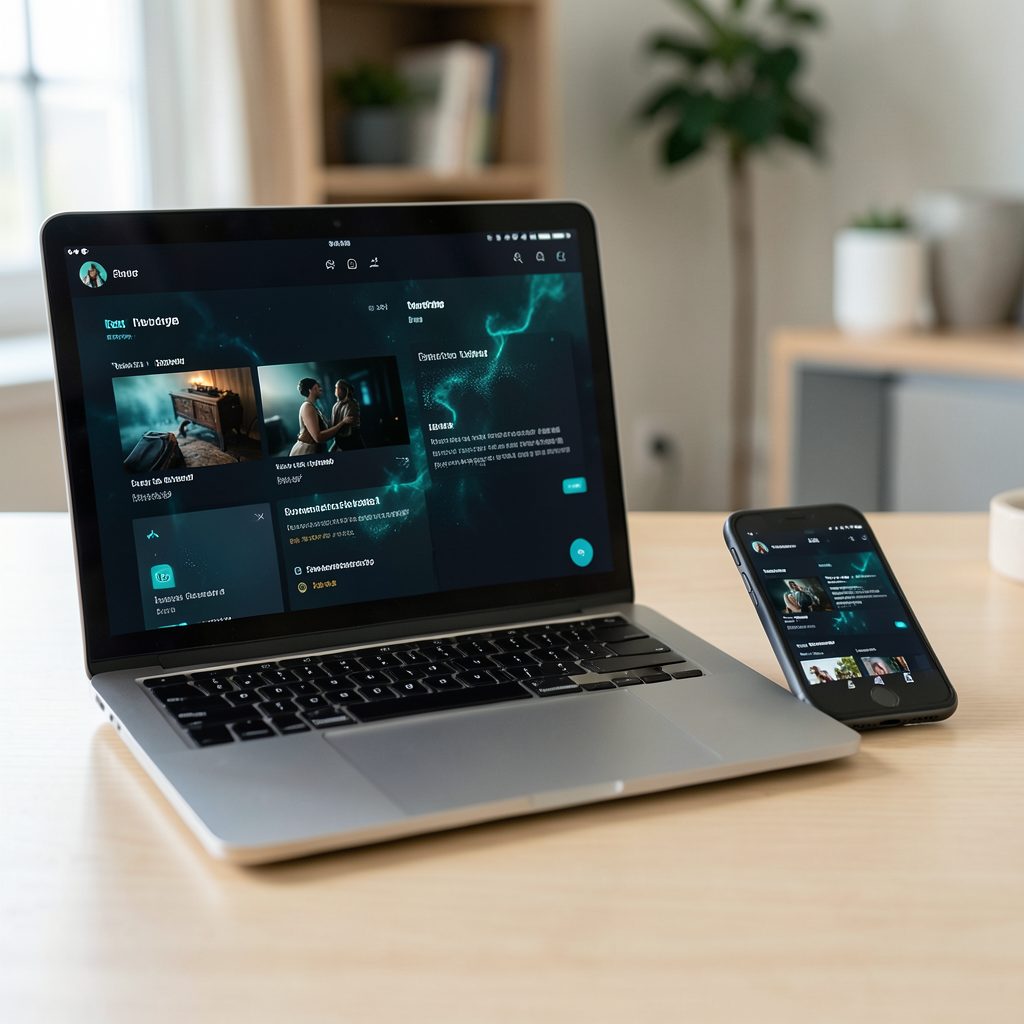
Popcorn Time became famous because it made BitTorrent feel like a conventional streaming service. Instead of asking users to search for torrent files, configure a client, and wait for a download, the application presented films and television shows in a polished catalog. Selecting a title started playback while the underlying torrent transfer continued in the background.
That simple design created both its appeal and its problems. The original project disappeared quickly under legal pressure, yet its source code remained available. Developers could copy, modify, and redistribute it, producing a long chain of applications with similar interfaces, different names, changing domains, and uneven levels of reliability.
The history of Popcorn Time forks is therefore less a straight product timeline than a story about open-source code, copyright enforcement, community development, and user expectations. Time4Popcorn, Popcorntime.io, Butter, and later variants each responded to weaknesses in earlier releases while inheriting many of the same technical and legal risks.
The Original Project And Its Sudden Disappearance
Popcorn Time appeared in early 2014, created by a small group of developers in Argentina. Its interface borrowed familiar ideas from Netflix and other subscription platforms: cover art, categories, search, subtitles, and instant playback. The major difference was that its catalog relied on torrents rather than licensed streaming servers.
The application quickly attracted international attention. Rights holders argued that it encouraged unauthorized access to copyrighted movies and series, while its developers described the software as a neutral technology project. The dispute became intense almost immediately. Within days of its public release, the original team shut down the main project and removed its website and repositories.
Closing the original service did not eliminate the code. Copies had already spread through GitHub, file-sharing networks, and developer communities. That availability allowed other teams to continue the concept under new identities, often with redesigned websites and separate release schedules.
Time4Popcorn And The First Major Forks
Time4Popcorn was among the best-known successors. It preserved the central experience: a searchable media library, torrent-based playback, subtitle support, and a desktop application that attempted to hide the complexity of peer-to-peer transfers. For many users, it became the practical replacement for the short-lived original.
The fork also showed why names and domains became a recurring problem. Popcorn Time projects were frequently copied, renamed, blocked, or moved to new web addresses. A website using a familiar logo did not necessarily belong to the same developers as an earlier release. Users could encounter several applications claiming to be official, even when their code, maintenance practices, and security standards differed substantially.
Time4Popcorn helped establish a recognizable fork culture. Developers competed over playback performance, subtitle libraries, platform support, and the speed at which new releases appeared. Some versions targeted Windows, macOS, and Linux, while mobile builds and unofficial packages introduced additional privacy and malware concerns.
Popcorntime.io And The Forking Effect
Another influential branch was associated with Popcorntime.io. It gained a large user base and became one of the most visible Popcorn Time identities during 2015. Its developers tried to maintain a modern interface while dealing with the difficult technical task of indexing torrent sources, supporting subtitles, and keeping playback stable across different networks.
The project also demonstrated that a fork could become a target in its own right. Legal action and pressure from rights-holder organizations contributed to the closure of Popcorntime.io and related infrastructure in 2015. Some developers withdrew, while others moved to different repositories or launched replacement services.
This cycle shaped public understanding of the software. A shutdown rarely meant that every copy vanished. Instead, it often produced another wave of forks, mirrors, and unofficial builds. The result was continuity for users but uncertainty about provenance. An application could look familiar while being maintained by an entirely different group.
How Forks Differed In Practice
Although many forks shared the same visual language, they were not identical products. Differences appeared in the torrent index, metadata providers, subtitle services, media-player integration, update mechanisms, and supported operating systems. Some prioritized a large catalog, while others focused on a cleaner interface or fewer bundled components.
The following comparison captures the broad role of several important branches. Dates are approximate because projects often overlapped, changed names, or continued through unofficial repositories after their main websites disappeared.
| Fork or Project | Approximate Period | Main Contribution | Common Limitation |
|---|---|---|---|
| Original Popcorn Time | 2014 | Introduced the familiar torrent-streaming interface | Shut down soon after launch |
| Time4Popcorn | 2014 onward | Continued desktop playback and the recognizable catalog design | Confusing domains and unofficial copies |
| Popcorntime.io | 2015 | Expanded visibility, catalog features, and community development | Legal pressure and infrastructure closure |
| Butter Project | 2015 onward | Reworked the codebase with a more modular, open-source direction | Limited mainstream adoption and fragmented releases |
| Later community forks | 2016 onward | Added platform ports, media features, and updated sources | Variable maintenance, security, and legality |
The table should not be read as a list of officially connected releases. Some projects shared code, while others reused design ideas or modified abandoned repositories. That distinction matters when evaluating an installer. A familiar title or icon is not proof that a current build comes from the original developers.
For readers researching how the software worked, a Popcorn Time online guide can provide background on browser-based access and setup terminology. Any current version should still be assessed independently, because project names and download locations have changed repeatedly over the years.
Butter And The Push Toward A Cleaner Foundation
Butter emerged from the same broader development movement but pursued a somewhat different identity. Rather than relying entirely on the Popcorn Time brand, the Butter Project presented itself as a more open and modular foundation for media applications. Its developers aimed to separate the technology from the controversy surrounding a preselected catalog of copyrighted content.
That distinction influenced how Butter was discussed. A general-purpose media framework can be used with legitimate sources, private libraries, or plugins that comply with applicable law. In practice, however, public discussions often connected Butter to Popcorn Time because of shared code, overlapping contributors, and a similar user experience.
Butter’s importance lies in that attempt to redirect the project’s technical ideas. It treated the interface, playback workflow, and plugin structure as reusable components rather than a single fixed streaming service. The approach appealed to developers who wanted to experiment with an open-source media center without maintaining a branded torrent catalog.
The project did not replace every Popcorn Time fork. It faced the same obstacles as other volunteer software: limited development resources, uncertain hosting, platform maintenance, and the difficulty of keeping third-party integrations functional. Still, Butter marked a shift from reproducing the original application toward building a flexible media framework.
Why The Fork Model Kept Repeating
Forking was possible because much of the client-side code was open source and easy for developers to download. A new team could change the name, update the interface, switch APIs, alter torrent providers, or add Chromecast and AirPlay support without rebuilding the concept from nothing. This lowered the barrier to entry for both serious contributors and opportunistic distributors.
The model also created an unstable relationship between software and service infrastructure. The application itself might be available, but its catalog provider, subtitle API, torrent index, or update server could disappear. When one component failed, users often searched for replacement builds, which increased the risk of installing tampered software.
Platform support became another dividing line. Desktop releases were usually the most mature, while Android packages and smart-TV adaptations varied widely. Some forks offered remote-control features, multi-device playback, or casting support; others bundled outdated players or requested permissions unrelated to their stated purpose.
Security concerns remain especially important with abandoned forks. An installer from an unknown mirror may contain adware, credential-stealing code, or a modified update routine. Even a clean application can expose a user’s IP address to torrent peers because BitTorrent is based on visible peer connections rather than private one-to-one streaming.
Legal And Privacy Considerations Today
The technology behind Popcorn Time is not automatically illegal in every use. BitTorrent can distribute open-source software, public-domain films, independent productions, and other authorized material. The legal issue usually concerns the source and permission for the content being accessed, as well as whether a user is uploading copyrighted material to other peers.
Streaming through a torrent client does not necessarily provide the same legal position as conventional streaming. While a video is playing, pieces may be downloaded and shared with the swarm. Laws differ by country, and enforcement practices vary, so users need to consider local copyright rules rather than rely on the application’s interface or marketing language.
A VPN can encrypt traffic between a device and the VPN provider and may reduce exposure to local network observers. It does not turn unauthorized distribution into authorized use, and the VPN company can still have its own logging, jurisdiction, and acceptable-use policies. Privacy tools should be understood as network-security measures, not legal permission.
For safer evaluation of any fork, examine whether its source code is public, whether releases are signed or verifiable, how frequently the project is updated, and whether its download page explains permissions and data handling. Avoid random APK files, “premium unlocked” packages, browser extensions that claim to be required for playback, and installers that disable operating-system security warnings.
Practical Ways To Evaluate A Fork
A careful review is more valuable than choosing a fork solely because its name is familiar. Before installing or using any Popcorn Time-related software, consider these points:
- Check the project’s repository, release history, developer identity, and documentation rather than trusting a copied landing page.
- Verify that the software supports legitimate content sources and does not require suspicious browser extensions or unrelated permissions.
- Use current antivirus protection and scan downloaded installers, archives, and mobile packages before opening them.
- Review local copyright rules and remember that torrent playback may involve simultaneous uploading to other peers.
- Prefer licensed streaming services, public-domain libraries, or authorized media-server tools when the goal is convenient multi-device playback.
The legacy of Time4Popcorn, Popcorntime.io, and Butter can still be seen in today’s media applications. Catalog-style interfaces, subtitle automation, adaptive playback, casting, and plugin-based design all reflect ideas popularized during that period. The difference is that modern services increasingly separate those features from unlicensed content distribution.
Understanding the fork history helps explain why a download page can be active while a project is effectively abandoned, why several “official” versions may exist, and why a VPN alone cannot resolve every privacy or legal concern. Research the software’s origin, inspect its current maintenance status, and choose content sources you are authorized to use before pressing play.