


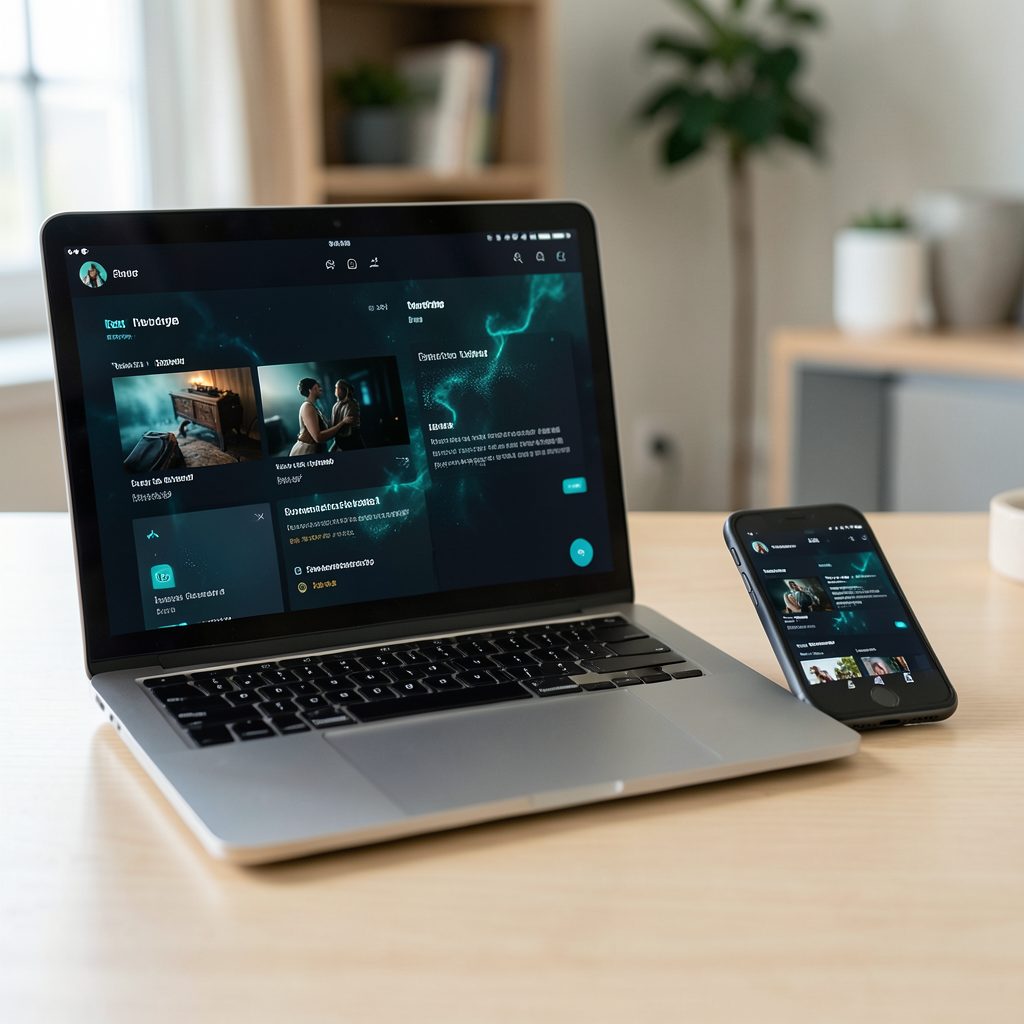
Popcorn Time vs Torrent Clients: Choosing How to Watch
Popcorn Time and traditional torrent clients use related peer-to-peer technology, yet they create very different viewing experiences. One is designed to make a movie or television episode playable within minutes, while the other focuses on transferring a complete file to your device for later use. The distinction affects speed, storage, privacy, playback quality, and the amount of control you have over each download.
This difference matters when choosing between torrent streaming and downloading. Popcorn Time can feel closer to a conventional streaming service because its interface presents a searchable library, subtitles, playback controls, and options for sending video to another screen. A torrent client is more hands-on: you select a torrent file or magnet link, manage the transfer, and open the finished media with a compatible player.
Neither option changes the legal status of the content being accessed. Copyright rules differ by country, and many files shared through peer-to-peer networks may not be licensed for distribution. Understanding how each approach works helps you make more informed decisions about lawful content, network security, and device performance.
How the two approaches work
Popcorn Time is generally built around a catalog-style interface. You choose a title, select a source, and begin playback while pieces of the video arrive through a BitTorrent swarm. The application usually stores temporary data locally, allowing the film or episode to play before the full transfer is complete. The exact behavior depends on the fork, operating system, available sources, and player configuration.
A torrent client takes a less automated route. Applications such as qBittorrent, Transmission, or Deluge connect to peers and download the selected files to a folder. You can often prioritize individual files, limit upload and download speeds, pause transfers, and continue them later. Once the file is available, you choose a media player separately.
This makes Popcorn Time an integrated media experience, whereas a torrent client is a general file-transfer tool. Popcorn Time emphasizes discovery and immediate playback. A conventional client emphasizes control, persistence, and access to the complete file set.
Watching immediately versus keeping a file
The main attraction of Popcorn Time is reduced waiting. If a torrent has enough active seeders and your connection is stable, playback may begin shortly after you choose a title. This suits viewers who want to watch a single film or episode without maintaining a personal media library. Temporary storage can also be useful on devices with limited free space.
The trade-off is that playback depends on the swarm throughout the viewing session. A weak source, changing peer availability, or an unstable connection can cause buffering. High-definition and ultra-high-definition video require substantial bandwidth, and the application may need to maintain a steady download rate ahead of the playback position.
Torrent clients are slower at the beginning because they usually require the file to finish downloading before viewing. That delay provides a more reliable experience later. Once the file is complete, playback does not depend on active peers, and you can watch it repeatedly, move it to another device, or archive it for personal access where legally permitted.
For users who frequently rewatch content or build a local media collection from legitimate sources, downloading may be more practical. For occasional viewing, streaming-style playback can reduce file management and make the process feel more convenient.
Control, quality, and storage
A torrent client offers detailed control over the transfer. You can inspect file names, sizes, codecs, subtitles, audio tracks, and resolution before downloading. Many clients allow selective downloading, so you can avoid unwanted extras or choose only a specific episode from a larger collection. They also support scheduling, bandwidth limits, queue management, and download locations.
Popcorn Time often hides much of this complexity behind a simpler interface. That is helpful for accessibility, but the available quality and subtitle options depend on the metadata supplied by the particular fork and its sources. Some versions may offer several resolutions and audio tracks, while others provide limited information until playback begins.
Storage requirements differ substantially. Streaming applications still use local disk space for buffering or temporary files, but they usually remove or overwrite data according to their settings. A torrent client keeps the completed media until you delete it. A season of television can consume tens of gigabytes, especially when high-bitrate files are involved.
The choice also affects data usage. Both methods transfer peer-to-peer content, but a download may continue seeding after the file finishes. Streaming can upload and download during playback as well. Checking the application’s seeding and bandwidth settings is important on capped home connections or mobile hotspots.
| Factor | Popcorn Time-style streaming | Traditional torrent client |
|---|---|---|
| Starting playback | Usually quick when sources are healthy | Usually waits for completion |
| Storage use | Temporary or cached data | Full file remains on disk |
| Playback reliability | Depends on the active swarm | Stable after completion |
| File control | Limited to interface options | Detailed file and transfer controls |
| Rewatching | May require another peer connection | Available locally after download |
| Device flexibility | Often includes casting or built-in playback | Requires a separate player or media server |
| Technical effort | Lower for basic viewing | Higher, with more configuration choices |
Privacy, safety, and legal boundaries
Peer-to-peer applications expose a device’s network address to other participants in a swarm. That exposure occurs because peers need to connect directly to exchange pieces of data. A VPN may conceal the public IP address from other peers, but it does not make unauthorized distribution lawful, eliminate malware risks, or guarantee complete anonymity. Users should review local regulations and the provider’s privacy policy before relying on any privacy service.
Popcorn Time forks also vary in quality and maintenance. Unofficial installers can contain aggressive advertising, bundled software, tracking components, or modified code. Downloading an application from an unknown mirror creates a separate security risk from the media itself. Verify the source, inspect permissions, keep operating systems updated, and use reputable endpoint protection.
Torrent clients are not automatically safer simply because they are more technical. A torrent can include misleading file names, executable malware, malicious subtitle files, or unwanted bundled content. Media files should be treated cautiously, and executable files should never be opened merely because they appear alongside a video.
Legal exposure can also differ in practice. A torrent client often continues uploading while a file is being downloaded or seeded, which may constitute redistribution under copyright law. Streaming through a torrent-based application can involve uploading pieces to other peers as well. Choose content that you have the right to access, such as public-domain works, authorized independent releases, or files shared by the copyright holder.
Devices, casting, and home viewing
Popcorn Time is often more convenient for living-room playback because some forks support Chromecast, AirPlay, or direct integration with a television platform. The app can act as a lightweight media center: browse on a phone or computer, select a title, and send the stream to a compatible display. Compatibility varies, so a feature advertised by one fork may be absent from another.
Fire TV and Android-based devices can require additional setup, especially when an application is not available through an official store. Anyone assessing Firestick installation steps should pay attention to app permissions, source verification, remote-control navigation, and the risks of installing packages from unfamiliar locations.
A torrent client fits well with a home server, network-attached storage device, or desktop connected to a television. Completed files can be organized with a media server and played across multiple devices, often with better control over subtitles, artwork, transcoding, and user profiles. This setup takes more time and may require port, storage, and network configuration.
Mobile users should also consider battery consumption and data costs. Peer-to-peer transfers can run continuously in the background, while high-resolution streaming can quickly use a cellular allowance. A wired connection or strong Wi-Fi signal is preferable for large files and sustained playback.
Which option fits different viewing habits
Streaming-style playback is a reasonable fit for someone who values convenience, watches content once, and does not want to manage folders or media-server software. It is also attractive when storage is limited. The user experience resembles an on-demand platform, even though the underlying delivery method is different.
Downloading is better suited to viewers who need dependable offline playback, want precise control over file quality, or plan to watch the same content on several devices. It also makes sense for lawful media collections, archival projects, and authorized files that must remain available without an internet connection.
A hybrid approach can work for technically confident users. They might use a simple application for quick playback of authorized sources and a torrent client for large, legitimate downloads. The important distinction is to choose based on the content’s licensing, the network environment, and the level of control required rather than assuming one method is universally superior.
Recommendations for a safer choice
- Use peer-to-peer applications only for content you are legally allowed to access or share.
- Prefer official project pages, reputable repositories, and verified release information when installing software.
- Check available storage, bandwidth limits, seeding behavior, and device compatibility before starting a transfer.
- Use a trusted media player and keep your operating system, browser, and security tools updated.
- Review VPN policies carefully, remembering that privacy protection does not replace copyright compliance.
Popcorn Time-style streaming offers speed and simplicity, while torrent clients provide control, local ownership of files, and dependable replay after downloading. Compare the source, device, connection, storage capacity, and legal permissions for each title before choosing a workflow. For practical setup guidance and broader coverage of streaming tools, explore the site’s platform guides and troubleshooting resources before installing or configuring peer-to-peer software.