


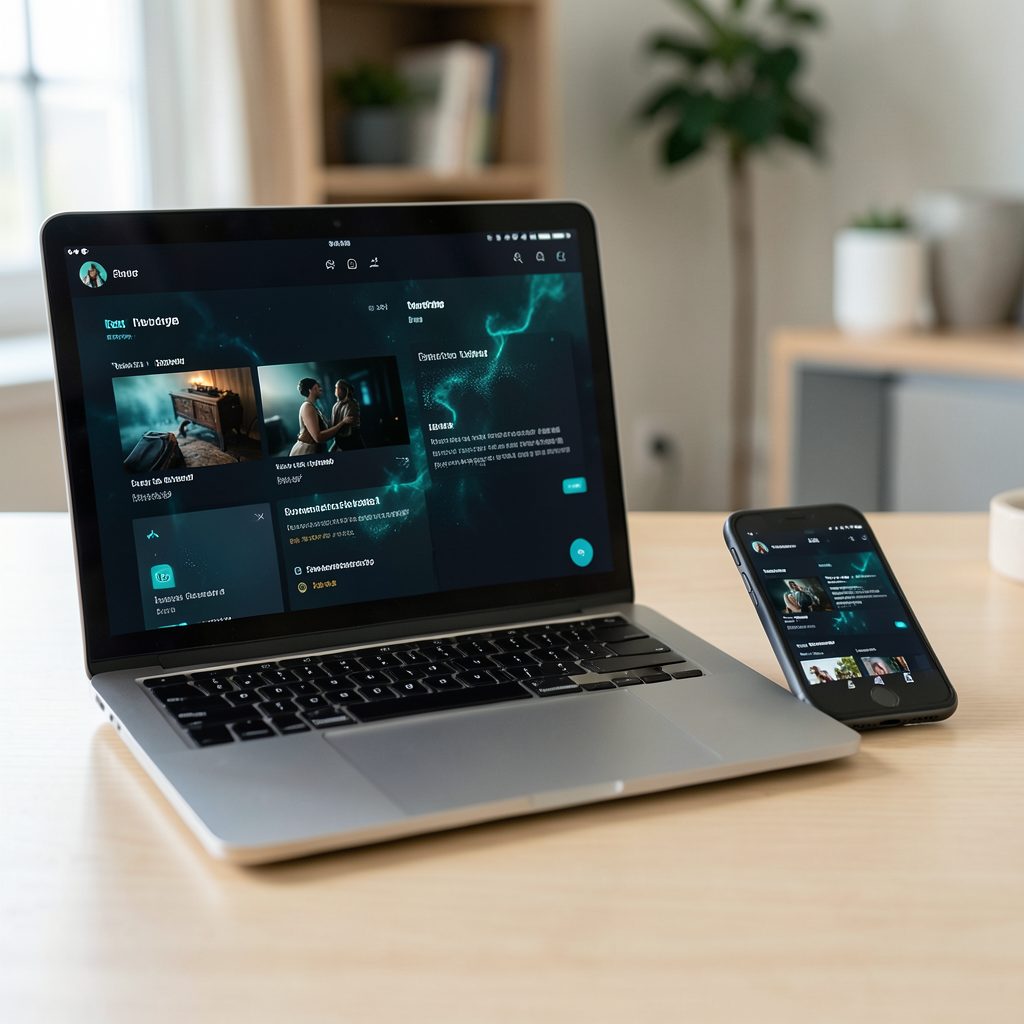
Popcorn Time vs Fenix: A Torrent Streaming App Shootout
Popcorn Time and Fenix belong to the same broad category of torrent streaming applications: they search peer-to-peer sources, assemble available video files, and play them through an interface that resembles a conventional streaming service. That familiar design is appealing, especially when a title is split across several paid platforms, but the underlying technology creates differences in speed, reliability, privacy, and legal exposure.
For viewers in Australia, the comparison also depends on practical conditions such as NBN performance, evening congestion, data limits, and the availability of local services. A film that plays smoothly in Melbourne may buffer repeatedly on a busy home connection in regional Queensland. This shootout compares the two apps as software products while keeping copyright, device security, and lawful viewing firmly in the picture.
How The Two Apps Work
Popcorn Time is best understood as a family of related projects rather than one permanent, centrally managed application. Different forks can use different catalogues, interfaces, trackers, update systems, and installation packages. As a result, two downloads carrying the Popcorn Time name may behave differently and may not offer the same level of trust.
Fenix follows a similar fork-based model. Its branding may be associated with a particular interface or development group, yet the available build can change as repositories disappear, domains move, or maintainers publish replacements. This fluid environment is important because a polished website does not automatically prove that an installer is authentic or safe.
Both applications generally rely on torrent metadata and peer connections rather than a standard video-on-demand server. Playback can begin before the entire file is stored, but the experience depends on the number of peers, the health of the torrent, the selected quality, and local network conditions. A title with many active seeders may start quickly, while an obscure documentary can stall regardless of the app used.
Interface And Discovery
Popcorn Time usually aims for a television-style experience, with poster art, genres, search, subtitles, and a queue or favourites area. Its strongest advantage is familiarity. People moving from a service such as Netflix or Stan can generally understand the layout without much instruction. The catalogue presentation often feels more finished than the underlying torrent process suggests.
Fenix may place greater emphasis on speed and simplicity. Some builds use a lighter home screen and fewer visual elements, which can help on older Android hardware or a modest media box. The trade-off is that metadata, artwork, subtitle matching, and filtering may be less consistent. A title can be easy to locate in one build and strangely absent in another.
Neither interface should be judged solely by its appearance. Search results can include misleading duplicates, poor-quality encodes, incorrect subtitles, or files with suspicious names. A clean poster and a high-resolution label are not guarantees of a good source. Users should avoid unknown installers and examine permissions before allowing an app to access storage, local network devices, or other personal data.
Catalogue And Playback Quality
Popcorn Time often has an advantage in catalogue depth because popular forks attract attention from a broad user base. Mainstream Hollywood releases, older television series, and widely shared international films are more likely to have several quality options. That variety can make it easier to find a working stream, although availability changes constantly.
Fenix can perform equally well with popular releases, particularly when its search providers or torrent indexes are functioning. Its results may feel faster because the interface is less resource-intensive, but a quick search does not mean the selected stream will be stable. Source availability matters more than the logo on the home screen.
Playback quality is shaped by resolution, codec, audio format, and peer health. A 4K file may look impressive but require substantial bandwidth and a capable television or streaming stick. Australian households sharing an NBN connection during the evening can encounter buffering when several people are gaming, attending video calls, or watching legitimate services at the same time. Lowering the resolution can help, but it does not fix a dead or poorly seeded torrent.
Device Support And Casting
Popcorn Time has traditionally attracted users across Windows, macOS, Linux, Android, and selected television or mobile environments. Actual support depends on the current fork and whether a maintained installer exists. Compatibility with Chromecast, AirPlay, Android TV, and external subtitles can also vary between releases.
Fenix may be more attractive to Android users because some builds are designed around sideloading and touchscreen navigation. That flexibility can suit a spare phone, tablet, or inexpensive Android TV device, but it places more responsibility on the user. Sideloaded software should come from a verifiable source, and automatic updates from an unknown server deserve particular caution.
Casting is convenient in an Australian lounge room where a Chromecast or smart television is the main screen. Yet torrent playback and casting can introduce extra points of failure: the phone may act as a remote, the television may need to fetch the stream itself, or the app may transcode a file that the device cannot decode. AirPlay support can be especially inconsistent across forks, while direct HDMI playback is often more predictable.
Speed, Stability And Everyday Use
A useful comparison is less about peak speed than repeatability. Popcorn Time may offer a more polished buffer strategy and a larger selection of alternate sources, helping playback recover when one peer disappears. Fenix can feel quicker at launch and during navigation, particularly on modest hardware, but its performance may depend heavily on the specific release and search backend.
Home networking makes these differences visible. In Sydney or Brisbane, a fast plan can still experience congestion at the busiest hours, while users outside major metro areas may have greater variation in latency and evening throughput. Wi-Fi interference, an older router, and a streaming box placed behind a television can be just as influential as the nominal NBN tier.
Subtitles and audio switching are part of daily usability as well. Popcorn Time may provide more familiar subtitle controls, while Fenix can require manual selection or external subtitle files. Neither app should be treated as a dependable replacement for a paid platform when a household needs parental controls, guaranteed availability, accessibility features, or reliable support for a family movie night.
Privacy, Security And Legal Exposure
Torrent streaming exposes an important distinction between privacy and legality. A VPN can encrypt traffic between a device and the VPN provider, but it does not turn an unauthorised copy into a lawful one. It can also reduce visibility for a local network operator, yet the provider still becomes a party that may record connection information depending on its policy and jurisdiction.
Australian users should understand the legal risks of Popcorn Time before installing any fork. Copyright owners can monitor torrent swarms and identify internet connections associated with file sharing. Australian rights holders have used infringement notices and court processes in the past, and the potential consequences can include settlement demands, legal costs, or account-related disputes.
Security risks may be greater than copyright concerns. Unofficial forks can bundle adware, credential-stealing code, aggressive permissions, or altered media players. A VPN also cannot detect a malicious APK or repair a compromised computer. Downloading from random social media posts, disabling operating-system warnings, or entering streaming-service passwords into a third-party app creates avoidable danger.
For lawful privacy protection, choose a reputable VPN with clear ownership, transparent logging practices, modern protocols, and support for Australian servers where appropriate. Keep the operating system updated, use unique passwords, scan installers, and avoid granting administrator access unless the software has been independently verified. Legal platforms remain the safer choice for copyrighted films and shows.
Value Compared With Australian Services
The main appeal of Popcorn Time and Fenix is apparent cost: there is no conventional monthly subscription attached to the app itself. That calculation leaves out broadband usage, security tools, time spent troubleshooting, and the risk of unreliable or infringing sources. It also overlooks the value of stable playback and legitimate customer support.
Australia has a crowded legal streaming market. Netflix, Stan, Binge, Paramount+, Disney+, Prime Video, Apple TV+, and local free services such as ABC iview and SBS On Demand cover different parts of the catalogue. Kayo is particularly relevant for sports viewers, while free-to-air catch-up platforms can handle Australian drama, news, and reality programming without adding another paid subscription.
A rotating subscription strategy can be more practical than maintaining several services at once. A household might use one platform for a month, cancel it, and move to another when a desired series arrives. Library access, free trials where available, rental stores, and ad-supported options can also reduce costs while keeping viewing within authorised channels.
Which App Comes Out Ahead
Popcorn Time is the stronger choice for users who value a familiar interface, broad device coverage, and a more polished browsing experience across a maintained build. Its advantage is consistency of presentation rather than guaranteed performance. Since forks differ, the name alone cannot establish that a download is current, secure, or legitimate.
Fenix may suit technically confident Android users who prefer a lean interface and are comfortable dealing with changing releases. It can be responsive on modest hardware and may offer a useful alternative when a Popcorn Time fork is unavailable. Its weaknesses are the same qualities that give it flexibility: uncertain maintenance, variable compatibility, and a greater need to verify every installation source.
As a torrent streaming app comparison, the result is close on usability but uneven on trust. Neither app provides the dependable catalogue, legal certainty, or safety controls available from authorised services. For Australians weighing the two, the sensible decision is to treat both as experimental software, avoid infringing streams, protect personal devices, and use licensed platforms whenever the content is available there.
Check the current status of any Popcorn Time or Fenix build before installing it, verify the publisher and file integrity, and review the privacy and copyright implications first. For regular viewing, combine legitimate Australian streaming services with sensible subscription management, secure home networking, and a reputable VPN used for privacy rather than as a licence to access unauthorised content.