


Popcorn Time vs BitTorrent Clients: When to Use Each
Popcorn Time and conventional BitTorrent applications rely on the same broad peer-to-peer principle, but they present it in very different ways. One is designed to make movie and television playback feel like a streaming service, while the other gives users direct control over torrent files, download locations, queues, and sharing settings.
That distinction matters when choosing software for a particular task. Someone who wants to start watching quickly may value Popcorn Time’s catalog-style interface and built-in player. A user collecting legally distributed Linux images, public-domain films, or large creative projects may need the precision and reliability of a dedicated torrent client.
Both options also require careful attention to copyright, device security, network privacy, and the source of the content. Understanding how each model works makes it easier to choose a suitable tool without confusing convenience with safety or legal permission.
How The Two Models Work
A BitTorrent client downloads pieces of a file from multiple peers and reassembles them on the user’s device. The user usually begins with a torrent file or magnet link, selects a save location, and waits for enough data to arrive. The completed file can then be opened with a media player or another compatible application.
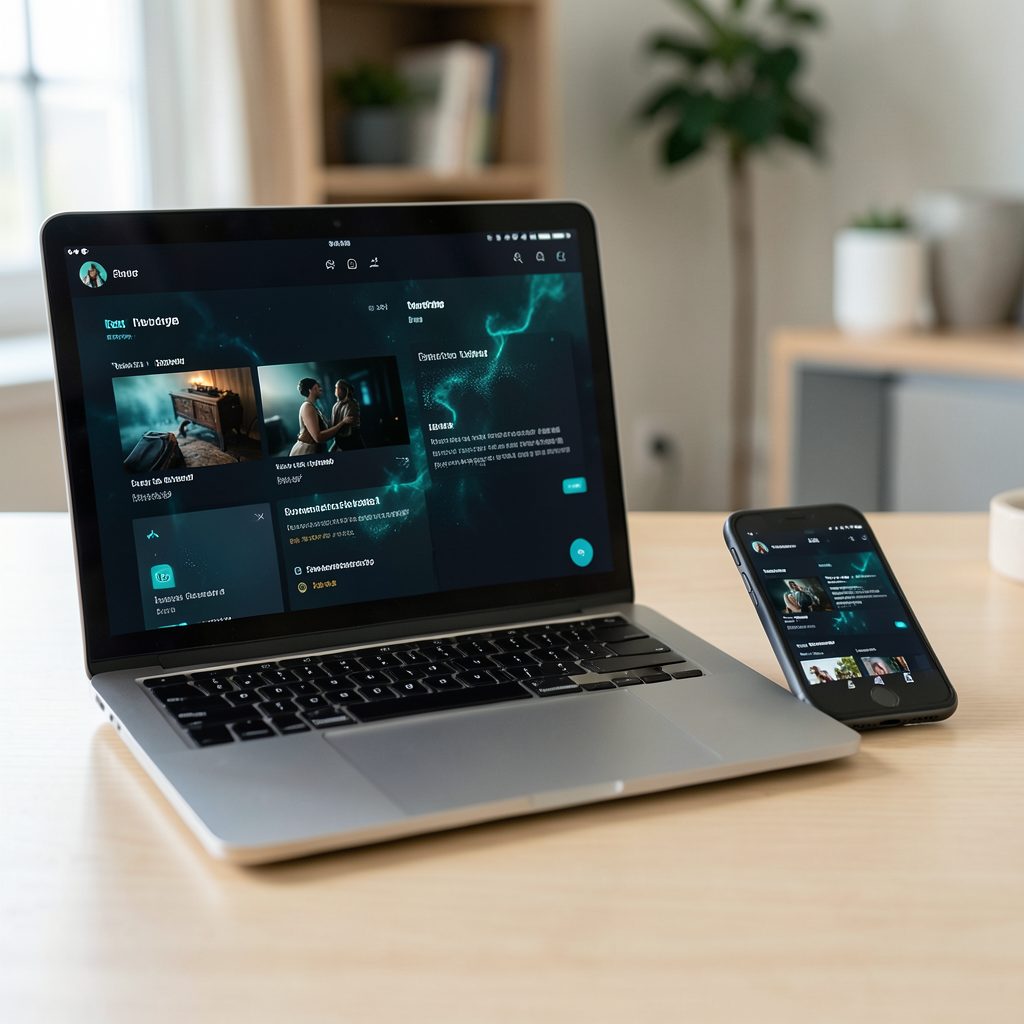
Popcorn Time places a friendlier interface over a similar peer-assisted delivery method. Instead of asking users to manage torrent metadata, it presents titles with artwork, descriptions, subtitles, quality choices, and playback controls. The application typically begins retrieving content while playing it, which creates a streaming-style experience even though the underlying technology is different from conventional video streaming.
This abstraction reduces setup work, but it also limits control. A BitTorrent client exposes information about trackers, peers, upload ratios, file priorities, and transfer rates. Popcorn Time generally hides those technical details so that users can focus on finding and watching content.
When Popcorn Time Makes More Sense
Popcorn Time is most convenient when the primary goal is immediate playback. Its interface is built around browsing a library, selecting a title, and choosing a stream quality. Users do not need to understand torrent folders, manually load magnet links, or locate a separate video player for every file.
The experience can be particularly useful on supported desktop systems and home entertainment setups. Features such as subtitle selection, resume playback, Chromecast, AirPlay, and multi-device support may make it easier to move from a computer to a television or compatible streaming device. Performance still depends on the fork, operating system, available peers, and network connection.
The name Popcorn Time also covers several independent forks rather than one universally maintained application. For context on why versions differ, readers can review this history of the original app. Checking the current project, release source, and platform compatibility is important because unofficial downloads may contain outdated software, aggressive advertising, or unwanted bundled programs.
Popcorn Time is less suitable when a user needs precise file management. It may offer limited control over individual files inside a torrent, seeding behavior, storage allocation, or download scheduling. It is a playback-focused tool rather than a general-purpose transfer manager.
When A BitTorrent Client Is The Better Choice
Dedicated clients such as qBittorrent, Transmission, and Deluge are better suited to users who want transparent control. They support magnet links and torrent files from legitimate sources, allow downloads to be paused or prioritized, and make it possible to select only certain files from a larger torrent package.
They are also more practical for long-running transfers. A user can set bandwidth limits for busy hours, schedule downloads overnight, assign different folders by file type, and continue a transfer after restarting the computer. Many clients provide queue management, automatic torrent handling, RSS integration, and detailed peer information.
This flexibility is useful for content that is distributed legally through peer-to-peer networks. Examples include open-source operating systems, public-domain archives, game patches, research datasets, and creators’ own releases. In these cases, the client acts as a dependable file transfer utility rather than a front end for a movie catalog.
The trade-off is a steeper learning curve. Users must find trustworthy torrent sources, identify the correct files, understand health indicators, and open the finished media separately. A client also makes it easier to download something unsuitable by mistake if the source and file details are not checked carefully.
| Factor | Popcorn Time | Dedicated BitTorrent Client |
|---|---|---|
| Main purpose | Browse and play video quickly | Download and manage files |
| Setup | Usually guided by a catalog interface | Requires a torrent file or magnet link |
| File control | Limited and often hidden | Detailed selection and prioritization |
| Playback | Commonly built in | Usually handled by another media player |
| Best use case | Convenient playback on supported devices | Legal archives, software, and managed transfers |
| Bandwidth controls | May be basic or unavailable | Often extensive scheduling and throttling |
| Storage management | Usually automatic or simplified | Custom folders, allocation, and file rules |
| Technical visibility | Low | High |
| Main concern | Fork reliability and content sourcing | Unsafe files, untrusted trackers, and configuration errors |
Performance, Privacy, And Device Support
Playback through Popcorn Time depends on obtaining data quickly enough to stay ahead of the video buffer. A title with many healthy peers may start smoothly, while a less popular release can pause frequently. Higher resolutions require more sustained bandwidth, and wireless congestion can become noticeable when streaming to a television.
A conventional client usually prioritizes completion rather than immediate viewing. It can download a file steadily in the background, verify pieces, and resume after interruptions. Once the transfer finishes, playback quality is no longer tied to the availability of peers. This makes the client more reliable for archiving or repeated viewing.
Privacy requires a realistic understanding of peer-to-peer networks. In a torrent swarm, participating peers may be able to see one another’s IP addresses. A VPN can reduce exposure of the home connection to other peers and may prevent an internet provider from easily associating traffic with the household, but it does not make unlawful activity legal or guarantee complete anonymity.
If a VPN is used, its privacy policy, jurisdiction, connection stability, leak protection, and treatment of peer-to-peer traffic deserve attention. Free VPN services may impose data limits, advertise heavily, or collect more information than users expect. A VPN also cannot protect against malicious downloads, fake applications, compromised subtitles, or phishing pages.
Legal And Security Considerations
The BitTorrent protocol itself is legal and widely used by software developers, universities, artists, and archivists. The legal question usually concerns the material being shared and whether the user has permission to download or redistribute it. Copyright rules vary by country, so a title’s availability through an application does not establish that watching or downloading it is authorized.
Popcorn Time forks can create additional uncertainty because project names, download pages, and included catalogs may change over time. Some builds are abandoned, while others are maintained by unrelated teams. Users should avoid installers from suspicious mirrors, verify the publisher when possible, and scan downloaded files before opening them.
Security practices apply to both types of software. Keep the operating system and media player updated, use reputable download sources, avoid cracked VPNs and “premium” forks, and be cautious with executable files disguised as videos. A legitimate video file should not require an unfamiliar browser extension or an administrator password simply to play.
Subtitles and codec packs deserve similar caution. Malicious websites sometimes use missing-subtitle messages to push unwanted downloads. It is safer to use the player’s built-in subtitle search or obtain subtitle files from a recognized provider, then scan them and avoid executable content.
Choosing Based On Your Actual Task
The best option depends less on brand preference than on the desired workflow. Popcorn Time emphasizes discovery and playback, while a BitTorrent client emphasizes transfer control and file ownership. Neither tool automatically solves licensing, privacy, or malware concerns.
Use a legal streaming service or an authorized media application when simplicity, stable playback, and licensed access matter most. Choose a dedicated client for files distributed through official torrent channels, especially when you need selective downloading, scheduling, verification, or long-term storage.
For users who decide to work with a torrent-based application, the following habits reduce avoidable problems:
- Download software only from the project’s verified website or official repository.
- Confirm that movies, shows, software, or archives are legally available in your location.
- Use a reputable VPN if peer-to-peer privacy is important, and test for DNS or connection leaks.
- Keep security software active and scan installers, subtitle files, and downloaded media.
- Prefer a dedicated BitTorrent client when you need detailed controls over files, bandwidth, or seeding.
Popcorn Time can be the simpler choice for supported, authorized playback, particularly when built-in subtitles and casting are useful. A conventional BitTorrent client is the stronger choice for controlled downloads, legitimate public repositories, and users who want to understand exactly what is being transferred.
Before installing either option, check the source, licensing status, platform support, and privacy settings. Then choose the workflow that matches the task: streamlined playback through a maintained application, or deliberate file management through a trusted client.