


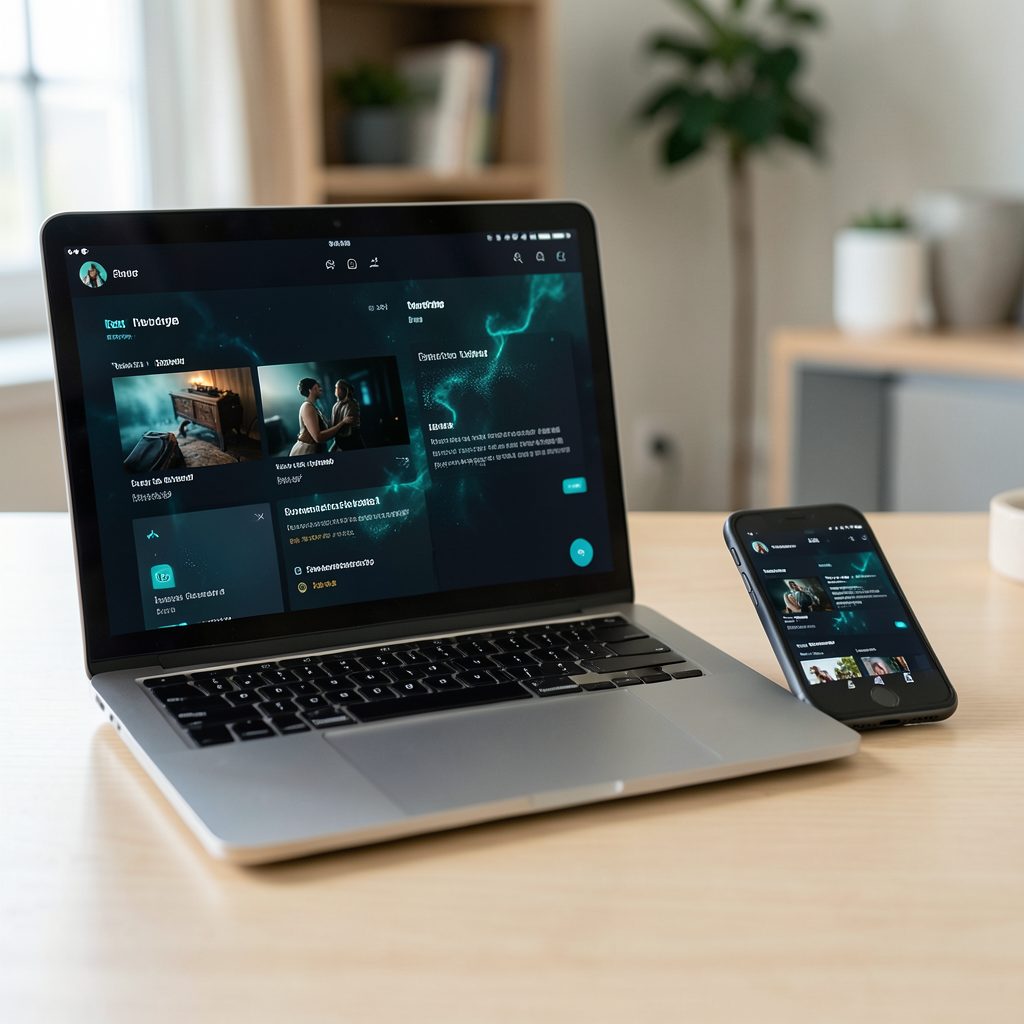
How to Use Popcorn Time Across Multiple Devices
Popcorn Time is designed around a familiar streaming experience, but its torrent-based playback model makes simultaneous viewing different from using a conventional subscription service. A computer, phone, television, or streaming stick may all play media through compatible forks, yet each device depends on its own app support, network connection, and available torrent sources.
The main challenge is coordinating playback without overloading the home network. Every active stream may download pieces of a video while uploading data to other peers. Two high-definition streams can therefore consume considerably more bandwidth than two ordinary web videos, especially when several devices share Wi-Fi.
The software also varies between Popcorn Time versions. Menus, supported platforms, casting options, subtitle controls, and account features may differ. Before setting up several screens, identify the fork you are using and download it from a source you trust. The Popcorn Time download guide can help clarify current platform and setup information.
What Multiple-Device Playback Actually Means
Using Popcorn Time on several devices can refer to several different arrangements. You may install the application separately on a laptop and Android TV device, cast one stream from a phone to a television, or play different titles on multiple screens at the same time. These approaches have different technical requirements.
Casting usually leaves the source device involved in playback. Depending on the fork and receiver, a phone may act as a remote control while the Chromecast or smart TV retrieves the stream, or the phone may continue handling the torrent and send the video across the network. The distinction affects battery use, bandwidth, and whether the source device can be switched off.
Separate installations provide greater independence. Each device can choose its own title, subtitles, and quality setting, but each one creates another peer-to-peer session. A single account, where supported, does not automatically guarantee synchronized libraries, watch history, or unlimited concurrent streams. Many forks do not provide a unified account system at all.
Prepare the Network Before Starting
A stable home network is more important than raw internet speed. Place fixed devices such as Android TV boxes, smart televisions, and desktop computers near the router or connect them with Ethernet. Use the 5 GHz Wi-Fi band for nearby modern devices, while 2.4 GHz may be more reliable through walls but is usually more vulnerable to congestion.
Estimate the combined bandwidth before opening several streams. A 720p video may require roughly 3–5 Mbps, while 1080p playback can use around 5–10 Mbps or more depending on encoding and peer availability. Ultra-high-definition content may require substantially more. Leave spare capacity for browsing, video calls, software updates, and the upload traffic associated with torrent-based streaming.
Router quality matters as well. Several active peer connections can strain an older router, particularly when many phones, smart-home products, and gaming systems are connected. Restarting the router, updating its firmware, and placing it in an open location can improve reliability. Avoid assuming that a faster internet package will solve every problem if the wireless signal is weak.
Match Devices With Compatible Playback Methods
The simplest arrangement is often one Popcorn Time installation per device. A Windows, macOS, Linux, Android, or Android TV version may be available depending on the fork. iPhone and iPad support can be more restricted, and installation methods may change over time. Check whether the version is intended for the exact operating system before transferring files or changing security settings.
Chromecast and AirPlay can extend playback to a television without installing the application on the TV itself. Chromecast generally works best when the phone or computer and receiver are on the same local network. AirPlay requires compatible Apple hardware or an approved receiver. If the cast icon is missing, check network isolation, permissions, receiver compatibility, and whether the selected fork supports that protocol.
| Setup | How it works | Main advantage | Common limitation |
|---|---|---|---|
| Separate app installations | Each device runs its own Popcorn Time session | Independent controls and titles | Highest bandwidth demand |
| Chromecast casting | A supported source sends playback to a Chromecast receiver | Convenient television playback | Depends on fork and receiver support |
| AirPlay mirroring or casting | Apple device sends video to an AirPlay receiver | Useful within Apple households | Compatibility varies by app and format |
| Laptop connected by HDMI | Computer supplies video directly to a television | Reliable picture and sound path | Requires a cable and nearby computer |
| One shared stream | A single playback session is viewed on another screen | Lowest network demand | Does not provide independent viewing |
When two people want different programs, separate sessions are usually necessary. When everyone wants the same program, casting or HDMI can avoid opening several torrent streams. This distinction can reduce buffering and makes it easier to identify whether a problem comes from the source, the network, or the receiving television.
Configure Each Session Carefully
Start with one device and test a short portion of a video before launching a second session. Select a moderate quality that the network can sustain, then check whether subtitles, audio tracks, and playback controls work correctly. Once the first stream is stable, add another device and observe network performance.
Avoid choosing the same weak torrent source on every device. Popcorn Time forks typically obtain media through available peers, and source health can vary by title. A popular file with many seeders may begin quickly, while a less common release can buffer even on a fast connection. If the application offers several quality or source options, compare them rather than repeatedly restarting the same one.
Keep the application versions consistent where possible. Different forks may use different catalogs, metadata, subtitle services, or torrent indexes, so two devices may display different results for the same film. Saving a title to favorites on one installation may not make it appear on another. Treat each installation as a separate player unless the fork clearly provides synchronized data.
Use separate playback quality settings when necessary. A television on Ethernet might handle 1080p, while a phone on crowded Wi-Fi may be more reliable at 720p. Lowering quality on one session is often more effective than repeatedly pausing every device.
Protect Connections and Respect Local Rules
Popcorn Time uses peer-to-peer technology, which can expose an internet connection to other participants in the swarm. A VPN may reduce the visibility of torrent traffic to the local network provider, but it does not make copyright infringement lawful, guarantee anonymity, or protect against every technical leak. VPN performance can also differ sharply between servers and providers.
If a VPN is used, install it on the device running the torrent session or configure it at the router level. A VPN active on a phone does not necessarily protect a smart TV that starts its own stream. Likewise, casting from a protected phone may not cover a receiver that independently retrieves content. Check whether the stream remains active when the source device is disconnected or powered down.
Legal rules differ by country and by the content involved. Streaming a work through a torrent-based application may involve downloading and uploading copyrighted material, even when the interface resembles a conventional streaming service. Use the software only in ways permitted by local law, and choose content that you are authorized to access. A VPN should be treated as a privacy and security tool, not a license to use protected media.
Solve Buffering and Device Conflicts
Buffering across several devices usually points to limited bandwidth, unstable Wi-Fi, insufficient torrent availability, or excessive peer connections. Pause the least important stream and see whether the remaining device recovers. If it does, reduce video quality, move one device to Ethernet, or stop other bandwidth-heavy activity such as cloud backups and game downloads.
When only one device fails, inspect that device rather than changing the entire network. Clear temporary application data, restart the app, check available storage, and confirm that the operating system is supported. On Android TV, force-closing the application and restarting the television can clear stalled playback processes. On a computer, update graphics drivers and confirm that hardware acceleration is functioning normally.
Audio and subtitle problems can also appear when casting. Test the same title locally on the source device, then try another title with a different file format. A receiver may support the video codec but fail with a particular audio track or subtitle type. HDMI often provides a dependable fallback when wireless casting repeatedly loses synchronization.
If devices compete for control, stop every active session and relaunch them one at a time. Do not leave several background windows open while starting a new stream. Some forks retain a torrent session after the playback window closes, so exit the application fully and verify that it no longer consumes network bandwidth.
Practical Habits for Several Screens
A small amount of planning keeps simultaneous playback manageable:
- Connect televisions, desktop computers, and streaming boxes by Ethernet whenever practical.
- Use separate quality settings based on each device’s screen and network connection.
- Test one stream before adding another, especially on a shared or limited data plan.
- Keep the operating system, casting receiver, and Popcorn Time fork compatible and current.
- Stop inactive sessions completely so background torrent activity does not continue.
It is also useful to name devices clearly in the router’s administration panel. Knowing which entry belongs to a television, laptop, or phone makes it easier to identify an overloaded connection. If the router supports quality-of-service controls, prioritize video calls and essential work traffic rather than allowing torrent sessions to consume every available connection.
For households that frequently watch different programs, separate wired connections and moderate playback quality are usually more dependable than trying to maximize resolution everywhere. For shared viewing, a single cast or HDMI connection is simpler and creates less peer-to-peer traffic. Keep personal data, banking activity, and work devices separate from untrusted applications whenever possible.
Set up one device first, confirm that the chosen fork behaves as expected, and then expand gradually. This approach makes multiple-device playback easier to control while reducing unnecessary bandwidth use. Review the legal position in your location and select only media you have the right to access before starting any session.