


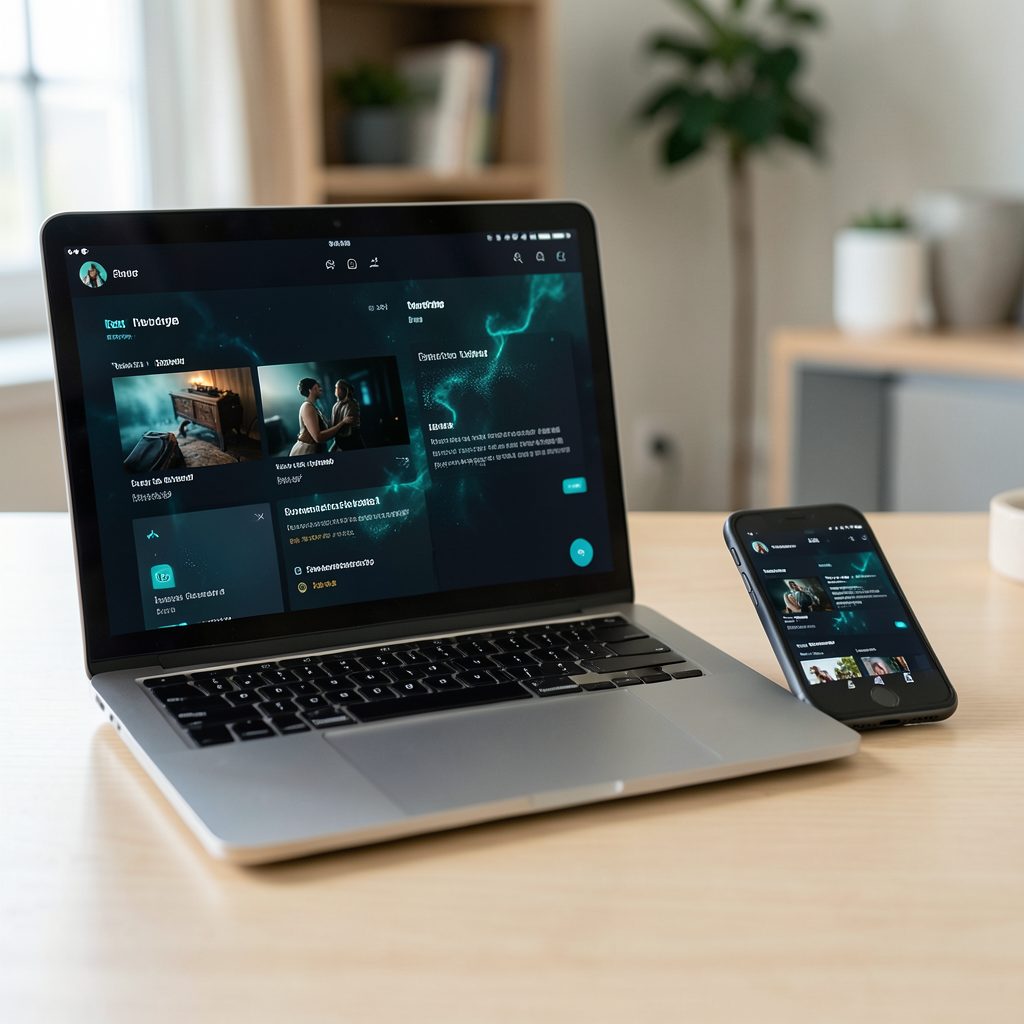
How to stream Popcorn Time across multiple devices
Popcorn Time is commonly used on laptops, phones, tablets, Android TV devices, and streaming hardware that supports casting. Playing content on several screens at once is possible in some setups, but the exact method depends on the Popcorn Time fork, operating system, media player, and network arrangement.
There are two different ways to approach multi-device playback. You can send one stream to several compatible screens, or start separate streams on multiple devices. The first method may save resources, while the second offers independent playback controls but demands significantly more bandwidth and processing power.
Because Popcorn Time applications and forks change frequently, menu names and supported features can differ. Before installing anything, verify that the software is from a trustworthy source and understand the copyright rules that apply where you live. A VPN can improve privacy in some circumstances, but it does not make unauthorized streaming or downloading lawful.
Choose between casting and separate playback
Casting is usually the simplest option when everyone wants to watch the same film or episode. A phone or computer acts as the controller, while Chromecast, AirPlay, or a compatible smart television handles playback. Once connected, the controlling device may only send commands and stream information rather than continuously displaying the video itself.
This approach works best when the application includes a visible Cast or AirPlay button. Some forks expose these controls only on particular platforms, and a few rely on the operating system’s share menu instead. If no native casting option appears, third-party screen mirroring may work, although it can reduce image quality and introduce delay.
Separate playback is more flexible for different viewers. Each television, tablet, or computer opens its own stream and can pause, seek, or select different content independently. The trade-off is that every device creates its own peer-to-peer traffic, so a household with several active streams needs a stronger connection and more capable hardware.
Prepare the network before starting
A reliable home network is more important than peak advertised internet speed. Place the main streaming devices close to the router, use the 5 GHz Wi-Fi band where practical, and connect fixed televisions or media boxes through Ethernet. A crowded wireless channel can cause buffering even when the broadband package appears fast enough.
Each separate stream consumes download capacity and may also upload pieces to other peers. High-definition video can require several megabits per second per device, while 4K content requires considerably more and may fluctuate according to the torrent swarm. Leave headroom for normal household traffic instead of planning around the connection’s maximum theoretical rate.
The router also has to manage many simultaneous connections. Peer-to-peer applications can create a large number of sessions, which may affect older routers or congested networks. If playback becomes unstable, reduce the number of active streams, close unrelated downloads, and restart the router before changing advanced settings.
Use Chromecast or AirPlay where supported
For Chromecast, make sure the casting device and the receiving television or dongle are connected to the same local network. Open the Popcorn Time application, select a title, start playback, and choose the Cast icon if it is available. Select the destination screen and keep the controller nearby for pause, volume, subtitle, and language controls.
Chromecast support is not consistent across every Popcorn Time release. Some versions cast only a media link, while others mirror the entire screen. A direct cast generally produces a better result than mirroring because the receiving device handles video playback independently. If a cast starts and then stops, the selected fork may be unable to provide a compatible stream format.
AirPlay follows a similar pattern on Apple hardware. An iPhone, iPad, or Mac can send video to an Apple TV or AirPlay-enabled television when both devices share the same network. Native AirPlay support is preferable to full-screen mirroring because mirroring can consume more battery, lower resolution, and expose notifications on the television.
Casting one source to multiple receivers is often restricted. Chromecast and AirPlay menus may allow only one active destination, and a Popcorn Time fork may not maintain more than one session. When several screens need the same program, a dedicated local media server or a television platform with built-in multi-room support may be more dependable than repeatedly pressing the cast button.
Run independent streams on several devices
For independent viewing, install a compatible application or use a supported browser-based player on each device. Sign in or configure each installation separately if the fork requires it, then choose a title and allow the stream to buffer before starting another. Beginning every stream at once can overload the network and make troubleshooting difficult.
A laptop connected to a television through HDMI is often more predictable than an unsupported smart-TV application. Android TV and Fire TV devices may offer greater flexibility, but compatibility varies by release and hardware architecture. iOS and iPadOS can impose additional restrictions on torrent clients, local playback, and background network activity.
Keep the source device cool and adequately powered. Several concurrent streams can place sustained demand on a computer’s processor, memory, disk, and network adapter, especially when the application transcodes video or handles subtitles. A modern desktop or mini PC is generally better suited to serving multiple screens than a low-powered phone.
The following comparison shows the practical differences between common arrangements:
| Setup | Best use | Main requirement | Common limitation |
|---|---|---|---|
| One device with screen mirroring | A quick demonstration or occasional shared viewing | Strong Wi-Fi and compatible receiver | Lower quality, delay, visible notifications |
| Chromecast from one controller | One film on one television | Native Cast support and same local network | Multiple receivers may not be supported |
| AirPlay to one receiver | Apple-focused households | AirPlay-compatible device | Fork and subtitle compatibility can vary |
| Separate playback on several devices | Different programs for different viewers | High bandwidth and capable router | Each stream consumes additional resources |
| Local media server with multiple clients | Regular multi-room playback | Server, storage, and compatible clients | More setup and format management |
Manage privacy, permissions, and safety
Torrent-based streaming can expose a device’s IP address to other peers, and the content source may be difficult to verify. Malicious installers, fake download pages, aggressive advertising, and modified forks are practical risks. Use reputable security software, keep operating systems updated, and avoid applications that request unrelated permissions.
A VPN may conceal your public IP address from peers and encrypt traffic between your device and the VPN provider. It cannot protect against malware inside an installer, prevent an account from being compromised, or guarantee smooth playback. Before relying on one, review this VPN safety explanation, including the provider’s logging policy, jurisdiction, protocol support, and effect on speed.
Privacy tools should be treated as one part of a wider safety plan. Use unique passwords, avoid entering payment details into unofficial Popcorn Time pages, and download only from sources you can independently verify. Most importantly, stream or download material only when you have permission or when it is legally available in your region.
Fix buffering, black screens, and failed connections
When one screen works but additional devices buffer, test the connection with all streams stopped and then add them one at a time. This reveals whether the bottleneck is broadband capacity, Wi-Fi performance, or the application itself. Lowering resolution and selecting a source with more peers can help, although source availability is outside the application’s control.
A black screen with audio often indicates a codec, hardware-acceleration, or receiver compatibility problem. Try another playback engine, disable hardware acceleration if the application provides that option, or use HDMI instead of wireless casting. Updating the receiving television or streaming stick can also resolve format-related failures.
If a device cannot discover Chromecast or AirPlay, confirm that guest Wi-Fi isolation is disabled and that VPN routing is not separating devices from the local network. Some routers place wireless clients on separate virtual networks, preventing discovery even when both devices appear to use the same internet connection. Rebooting the router and receiver can refresh local discovery services.
For separate playback, stop unused torrents and cap upload activity if the application offers bandwidth controls. Excessive upload traffic can increase latency for every device in the home. If the software has no reliable limits, close it between sessions and use a lawful streaming or local-media solution designed for multi-room playback.
Build a dependable multi-room setup
Occasional casting requires very little equipment: a stable router, a compatible phone or computer, and a television or dongle that supports the chosen protocol. Regular multi-device viewing is easier with wired connections, a central media computer, and playback clients that support the same video and subtitle formats.
A practical arrangement places the demanding work on one capable computer while lightweight devices receive media over the local network. This can reduce repeated torrent activity and give the household one place to manage storage, subtitles, and playback settings. It also requires careful attention to permissions, drive capacity, updates, and lawful media sources.
Before trying a new Popcorn Time release, check its Popcorn Time setup guide for platform coverage and current installation information. Fork-specific documentation may explain whether Chromecast, AirPlay, Android TV, or multiple sessions are supported, since these features are rarely identical across projects.
Recommended setup checks
- Connect televisions and media boxes through Ethernet whenever possible.
- Use 5 GHz Wi-Fi for nearby mobile devices and keep the router’s firmware current.
- Test one stream fully before adding another independent playback session.
- Prefer native Chromecast or AirPlay support over full-screen mirroring.
- Review privacy, copyright, and malware risks before installing any fork or companion tool.
With the network prepared and the playback method matched to the hardware, multi-screen viewing becomes easier to diagnose. Start with a single cast for shared viewing, move to separate devices only when the connection has enough capacity, and replace unreliable applications rather than repeatedly weakening security settings. Use the setup resources above to check platform compatibility, then configure each screen with lawful content and realistic bandwidth expectations.