

How to stream Popcorn Time to a Blu-ray player with DLNA
Popcorn Time is designed primarily for playback on a computer, phone, tablet, or compatible smart TV. A Blu-ray player usually does not run the application itself, but many models can receive media over a home network through DLNA. This makes the player a useful display and playback device when the video source is prepared correctly.
The main difficulty is that Popcorn Time streams content through torrent technology, while DLNA expects a media server or renderer to provide a stable video file. A direct connection is therefore less reliable than using a computer or mobile device as an intermediary. The exact steps also depend on the Blu-ray player’s network features, supported codecs, and operating system.
Before configuring anything, use the service only for content you are legally entitled to access. Copyright rules differ between countries, and a VPN can improve privacy on a shared network but does not make unauthorized streaming lawful. For general application information, platform notes, and setup resources, consult this Popcorn Time download guide.
How DLNA works with Popcorn Time
DLNA is a home-network standard that allows devices to discover and share media. A DLNA server stores or exposes video files, a control device selects the content, and a renderer or player displays it. Depending on the Blu-ray model, one device may perform two or all three roles.
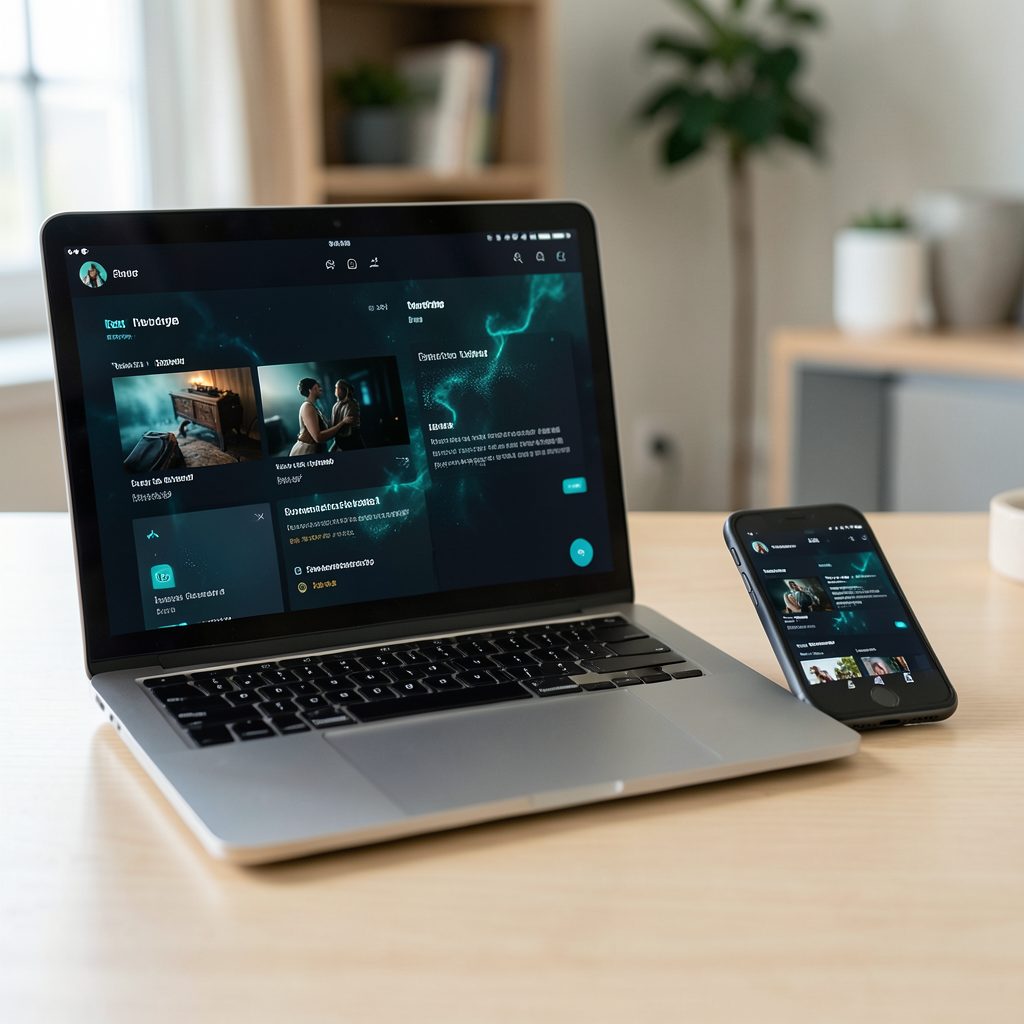
A typical Popcorn Time setup uses a laptop, desktop, or Android device as the source. The source either downloads a permitted video file first or exposes a currently available local file through a DLNA-compatible media server. The Blu-ray player then browses the server from its network media menu and plays the video.
Direct casting from a Popcorn Time interface may work with some forks or third-party casting tools, but it is not a universal feature. DLNA discovery can also fail when the application and Blu-ray player are connected to different wireless networks. Treat the computer or phone as the bridge between the torrent-based application and the television.
Check the Blu-ray player before connecting
Look through the player’s specifications or settings for terms such as DLNA, home network, media server, network media player, or digital media renderer. Some Blu-ray players support only a narrow range of video formats, while others can handle common MKV, MP4, AVI, H.264, and AAC combinations.
The player needs an active connection to the same local network as the source device. Ethernet is usually more stable for high-bitrate video, especially when the Blu-ray player is far from the router. If wireless is the only option, use a 5 GHz network where possible and avoid placing the router behind the television or inside a cabinet.
Codec support matters as much as the file extension. A player may recognize an MKV file but reject the video because it uses HEVC, an unsupported profile, or a high frame rate. It may also play the picture without sound when the audio track uses DTS or another format missing from the device.
Select a suitable media source
The most dependable arrangement is to use a computer as a local media server. After a legally obtained video is available as a complete file, software such as Jellyfin, Plex, Universal Media Server, or Serviio can publish it over DLNA. The Blu-ray player then accesses the file like any other network video.
This approach is more stable than trying to send partially loaded torrent data directly to the player. A DLNA server can also transcode an incompatible file into a format the Blu-ray hardware understands. Transcoding uses substantial processor power, so an older laptop may struggle with a high-resolution movie.
Some Android devices can act as the control point through DLNA-enabled file managers or casting applications. The phone still needs access to the same network, and the application must be able to send a compatible media stream. Battery-saving settings can interrupt playback, so keeping the device connected to power is sensible for a long film.
| Connection method | What you need | Main advantage | Common limitation |
|---|---|---|---|
| Computer media server | PC or Mac, DLNA server software, local video file | Most reliable and flexible option | Computer must remain awake |
| Android DLNA controller | Android device and compatible casting app | Convenient for short sessions | App and player compatibility varies |
| USB playback | USB drive and supported video file | No network configuration | No live streaming or remote browsing |
| HDMI from computer | HDMI-equipped computer and television or receiver | Broad format support | Does not use the Blu-ray player’s DLNA feature |
| Built-in player app | Blu-ray player with supported streaming service | Simple interface | App availability and updates may be limited |
Configure the DLNA server
Install a trusted media server on the computer that will provide the video. During setup, allow the server to scan only the folders containing media you are permitted to share. Give the library a recognizable name so it is easy to identify from the Blu-ray player’s menu.
Open the server’s network settings and enable DLNA or UPnP sharing. On Windows, the firewall may ask whether to allow local network access. Permit private-network communication while avoiding broad public-network permissions. On macOS or Linux, check the firewall and ensure the server is listening on the home network interface.
Start the media server before opening the Blu-ray player’s network browser. From the player’s home screen, choose Network, Media Server, DLNA, or a similar option. Select the computer, browse by folder or video category, and start a file. Some players take a minute to discover a newly enabled server, so restarting the network menu can help.
If Popcorn Time or a related application stores temporary files in a cache directory, do not assume that folder is suitable for DLNA sharing. Temporary files may be incomplete, encrypted, fragmented, or automatically deleted. A completed, playable file in a normal media folder is easier for the server and Blu-ray player to process.
Send content from a phone or computer
When the application or media server offers a Cast, Play To, or DLNA icon, select the Blu-ray player from the device list. The player may appear under its model number rather than a familiar room name. If the list is empty, verify that both devices are on the same router and that guest-network isolation is disabled.
A computer connected by HDMI can be a simpler alternative when DLNA refuses to cooperate. HDMI sends the desktop’s picture and sound directly to the television or receiver, bypassing the Blu-ray player’s codec restrictions. This is still useful when the goal is large-screen playback rather than using the player as a network renderer.
AirPlay and Chromecast are separate technologies from DLNA. A Blu-ray player that supports DLNA may not support either of them, and a television that accepts Chromecast may not appear in a DLNA device list. Use the protocol supported by the receiving hardware instead of expecting every casting button to work with every player.
Keep the source device active during playback. Disable sleep mode, close bandwidth-heavy applications, and avoid moving between Wi-Fi access points. Torrent-based playback can experience buffering when peers are slow, and the additional network hop to a DLNA player can make interruptions more noticeable.
Fix buffering, missing devices, and format errors
If the Blu-ray player cannot see the server, restart the player, router, and media-server application in that order. Confirm that the source has a private IP address on the same subnet as the player. A wired connection for one or both devices can quickly reveal whether wireless interference is the cause.
Buffering usually results from limited upload speed, a weak Wi-Fi signal, or real-time transcoding. Lowering the playback resolution may help, but the strongest fix is to use a completed local file and a wired Ethernet connection. Stop other downloads and check whether the media server is converting the video instead of sending it directly.
For an unsupported format, try an MP4 container with H.264 video and AAC stereo audio, which is broadly compatible with older consumer electronics. Conversion should be performed with lawful media and appropriate software. Avoid repeatedly changing file extensions; renaming MKV to MP4 does not convert the underlying codecs.
Subtitle support varies widely. Some players recognize embedded SRT subtitles, while others require a matching external subtitle file or ignore subtitles entirely through DLNA. If subtitles are essential, test a short sample before starting the full film. A computer connected by HDMI often provides better control over subtitle appearance and language tracks.
Keep playback private and lawful
DLNA itself operates inside the home network and does not provide anonymity. Anyone with access to that network may be able to see the shared server name and media-library information. Use a strong router password, keep firmware updated, and avoid enabling media sharing on public or hotel networks.
A VPN may conceal torrent traffic from the local internet provider, depending on the provider’s policies and your jurisdiction, but it can reduce speed and interfere with local-device discovery. Split tunneling or local-network access settings may be necessary for the Blu-ray player to find the media server. Do not treat a VPN as permission to access copyrighted material without authorization.
For regular viewing, a licensed streaming service, an authorized digital purchase, or a personal media library usually offers a smoother experience than torrent-based playback. Those sources are more likely to provide stable files, accurate subtitles, reliable audio, and support for modern televisions and streaming devices.
Use this setup checklist
- Confirm that the Blu-ray player supports DLNA playback and the video’s resolution, container, codecs, and audio format.
- Connect the player and source device to the same private home network, preferably through Ethernet for high-bitrate files.
- Use a DLNA media server with a completed, legally obtained video instead of exposing temporary torrent cache files.
- Enable local-network access through the computer’s firewall while keeping public-network sharing disabled.
- Test a short clip first to verify discovery, sound, subtitles, and buffering before starting a full-length program.
Begin with one compatible video and a basic media-server setup, then test playback from the Blu-ray player’s network menu. Once discovery and format support are confirmed, organize the permitted media library, label the server clearly, and keep the source device connected and awake throughout playback.