How to stream Popcorn Time on a Toshiba smart TV
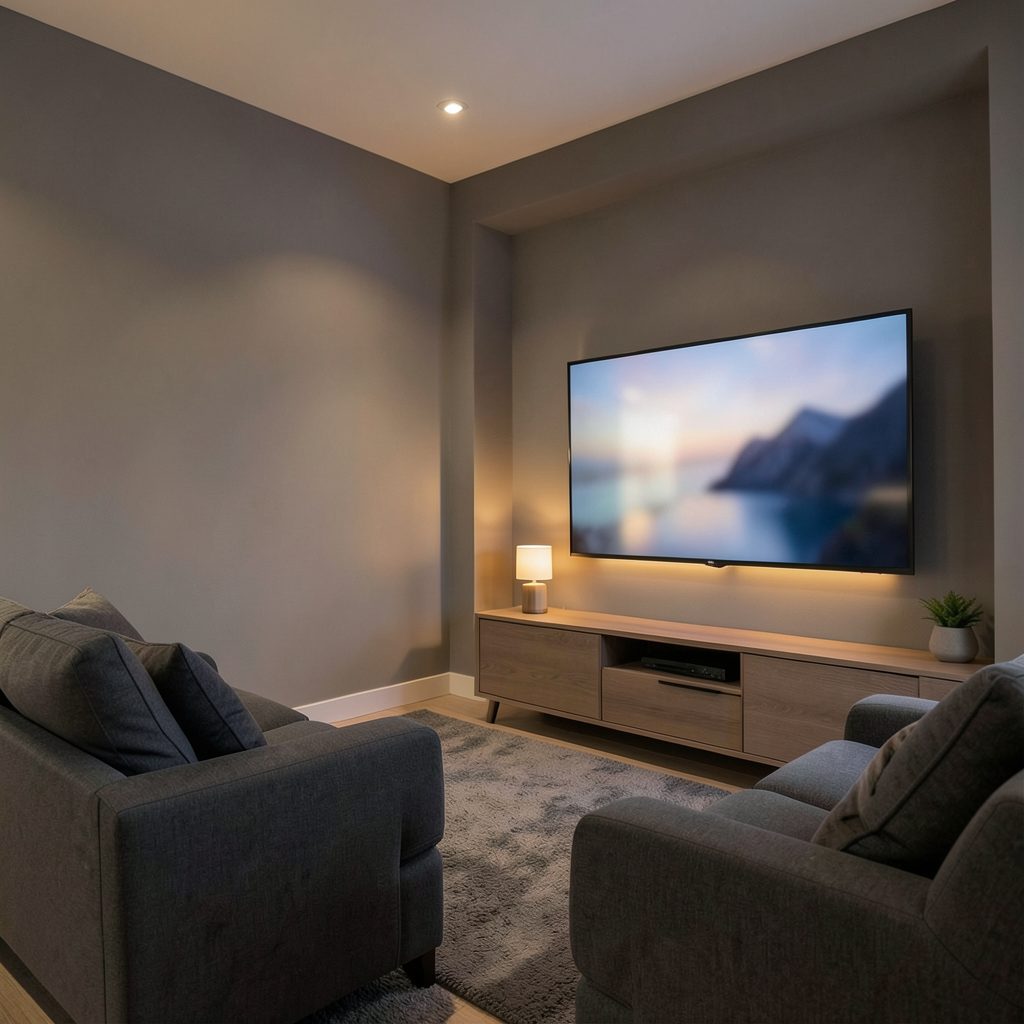
Popcorn Time has carved out a niche among Australian viewers who want a Netflix-style interface pulling from peer-to-peer sources. The app presents films and series with poster art, brief synopses and built-in subtitles, which makes it approachable for anyone who has used a mainstream streaming service. If your lounge room is anchored by a Toshiba smart TV, the natural question is whether you can run the application directly on the big screen or whether you need a bridge device.
Toshiba has cycled through several smart TV platforms over the years, from the older Toshiba Smart TV Portal running on a custom Linux build to the more recent Google TV and Vidaa systems. None of these official environments carry Popcorn Time as a downloadable app, and the closed app stores generally block torrent clients. That leaves you with three practical workarounds: casting wirelessly from a phone or laptop, mirroring your screen, or running a wired HDMI connection from a small computer. Each route has trade-offs around picture quality, reliability and setup effort.
The good news is that none of these methods require you to open your TV or modify its firmware. A standard home network, a recent mobile device or laptop and, ideally, a paid virtual private network subscription are all you need. The following sections walk through each option in detail, with a focus on conditions common to Australian households — patchy NBN performance during peak hours, varying ISP throttling policies, and the quirks of regional content libraries.
What makes Toshiba smart TVs different from a streaming box
Most Toshiba models sold in Australia between 2015 and 2019 used the company's own Smart TV Portal, powered by an Opera-based engine. These sets have a limited app catalogue and no support for sideloading Android packages, so Popcorn Time cannot be installed directly. From 2020 onward, Toshiba released a mix of Google TV and Android TV models in the Australian market, particularly through retailers like JB Hi-Fi and The Good Guys. These newer sets include Chromecast built in and a fuller app store, but they still do not host torrent-based players.
Even with the wider Google Play catalogue, Google has removed apps that interact with peer-to-peer networks from its store for years. The only reliable path remains external hardware or casting. Understanding your specific Toshiba model is the first practical step: check the back of the television for the model number and confirm which operating system it runs. Google TV and Android TV units will mention "Google" or "Android" on the packaging, while older Vidaa and Smart Portal sets will not.
Casting Popcorn Time with Chromecast
If your Toshiba is a Google TV or Android TV model, Chromecast support is already baked in. The mobile version of Popcorn Time includes a cast icon that sends the video stream to your television over your local Wi-Fi network. Both the Android and the iOS versions expose this option, although behaviour differs slightly between platforms.
On an Android phone, open Popcorn Time, pick a title and tap the cast icon in the player overlay. A device picker appears, showing your Toshiba TV listed by its friendly name — usually something like "Toshiba Living Room". Once selected, the picture moves from your handset to the television while your phone becomes a remote control. iPhone and iPad users follow almost the same steps, although the iOS app routes casting through AirPlay on supported TVs or through Chromecast via the Google Home framework.
The main Australian complication here is Wi-Fi quality. Houses in suburban Sydney and Melbourne often have decent dual-band routers supplied by Telstra or Optus, but apartments in Brisbane's inner west or Perth's CBD can suffer congestion on the 2.4 GHz band. If you see stuttering, switch your phone and TV to the 5 GHz network where possible. Running a speed test before starting a film is also wise; anything below 10 Mbps will struggle with 1080p content, especially during the evening when NBN traffic peaks between 7 pm and 11 pm AEST.
AirPlay and screen mirroring from Apple devices
Newer Toshiba TVs sold through Australian retailers from around 2021 ship with AirPlay 2 support. This means an iPhone, iPad or Mac can hand off video and audio to the screen without extra hardware. Popcorn Time does not natively push to AirPlay in the same way it pushes to Chromecast, but screen mirroring from the Control Centre on an iPhone works as a fallback.
To use this route, swipe down from the top-right corner of your iPhone to open Control Centre, tap the Screen Mirroring tile and choose your Toshiba television. Whatever appears on your phone — including the Popcorn Time player — is then shown on the TV. The downside is that the mirroring is full screen, so your phone cannot be locked or used for other tasks without interrupting playback. Battery drain is also noticeable on older iPhones.
For Mac users, the AirPlay icon appears in the menu bar when a compatible Toshiba is detected on the same network. Clicking it lets you extend or mirror the desktop. Running Popcorn Time inside a desktop browser-based wrapper or the Mac application, then sending the window over AirPlay, gives you a stable picture at full resolution. This method tends to be the most reliable for households where most viewers already own Apple gear.
Going wired with a laptop, mini PC or streaming box
Casting depends on a healthy wireless network, and AirPlay mirroring drains phone batteries. If you want a rock-solid link to your Toshiba, the simplest answer is an HDMI cable. Any laptop made in the last decade has an HDMI output, and most older machines can be tucked behind the television with a short 1.5-metre lead.
Plug the laptop in, set the TV to the correct HDMI input, and open Popcorn Time on the computer. The picture quality is generally better than casting because the signal is digital end to end and does not depend on Wi-Fi stability. You also avoid the audio delay that often plagues Chromecast, which makes a wired connection preferable for films with nuanced soundtracks.
If a laptop is too bulky, a small-form-factor PC or a streaming box running Android works just as well. Devices like the NVIDIA Shield TV, an Apple TV running a browser app, or a Raspberry Pi 4 with LibreELEC all handle Popcorn Time through HDMI. Australian online stores including Centre Com and Mwave stock several of these options, often with local warranty and same-day delivery to metro postcodes. Whichever device you choose, the principle is the same: Popcorn Time plays on the small computer, the HDMI cable carries the picture to your Toshiba, and your television acts purely as a display.
Optimising speed with a VPN and split tunnelling
Australian internet users are accustomed to thinking about speed. NBN plans are sold on evening throughput, and ISPs such as TPG, iiNet and Aussie Broadband publish typical busy-hour numbers that can dip into single-digit Mbps during congestion. Popcorn Time relies on peer-to-peer swarms, so total available bandwidth matters more than raw connection speed in many cases.
A virtual private network helps in two ways. First, it hides torrent traffic from your ISP, which on some plans is actively shaped or deprioritised. Second, it lets you connect to peers in regions where the swarm is healthier — for example, picking a Sydney or Singapore endpoint rather than a small regional Australian server. Privacy is the headline benefit, but performance is often the practical reason Australian users adopt a VPN.
Split tunnelling is a feature worth enabling on desktops and supported routers. It lets you route only the Popcorn Time application through the VPN while leaving other traffic — such as browsing, gaming and video calls — on your normal NBN connection. This avoids the speed penalty of encrypting everything. A clear walkthrough of the setup process is available in this split tunnelling guide, and most major VPN providers offer the toggle inside their desktop clients. For users who prefer a router-level approach, flashed routers running OpenWrt can apply the rule across the whole household.
Troubleshooting common playback problems
Buffering is the most common complaint. It usually points to one of three things: an underpowered source device, a congested Wi-Fi channel, or a thin torrent swarm. Switching to a wired HDMI connection solves the first two at once. If the swarm itself is the issue, choosing a different title with more seeders — often visible in the application as a coloured bar under each film — improves the experience immediately.
Audio sync issues are another frequent annoyance, particularly when casting. Chromecast and AirPlay both apply their own buffering, which can drift out of step with the source. Restarting the cast session usually fixes it, as does switching from a surround sound output to stereo on the TV. Subtitles failing to load is a less common bug, but toggling them off and on inside the player forces a fresh fetch from the application's subtitle server.
If the mobile app crashes on launch, clear its cache from your phone's settings menu and confirm you are running a recent version downloaded from a trusted source. Many third-party forks floating around the web embed malware or outdated code, and Australian users in particular have been caught by scam mirrors advertised on social media. Sticking to Popcorn Time's official site avoids that risk entirely.
Legal awareness and responsible use in Australia
Australia's copyright framework is administered by the Copyright Act 1968 and policed by the Australian Communications and Media Authority. Streaming copyrighted content without permission from the rights holder sits in a grey area that has attracted enforcement notices and, in more serious cases, court action against persistent infringers. A VPN is a legitimate privacy tool, but it does not make unlawful activity legal.
For viewers who want to stay on the right side of the rules, Popcorn Time's catalogue includes plenty of public domain films, Creative Commons releases and works whose Australian distribution rights have lapsed. Pairing the application with these legitimate sources removes any concern. Paid services such as Stan, Disney Plus and the locally grown Binge also offer free trials that can be combined with Popcorn Time's open content for a balanced viewing diet.
Pick the method that suits your home network, take a few minutes to configure a VPN with split tunnelling for smoother performance, and settle in for a long evening on the couch. With a Toshiba smart TV on the wall and the right bridge device in hand, the rest of the setup comes together in under half an hour.