


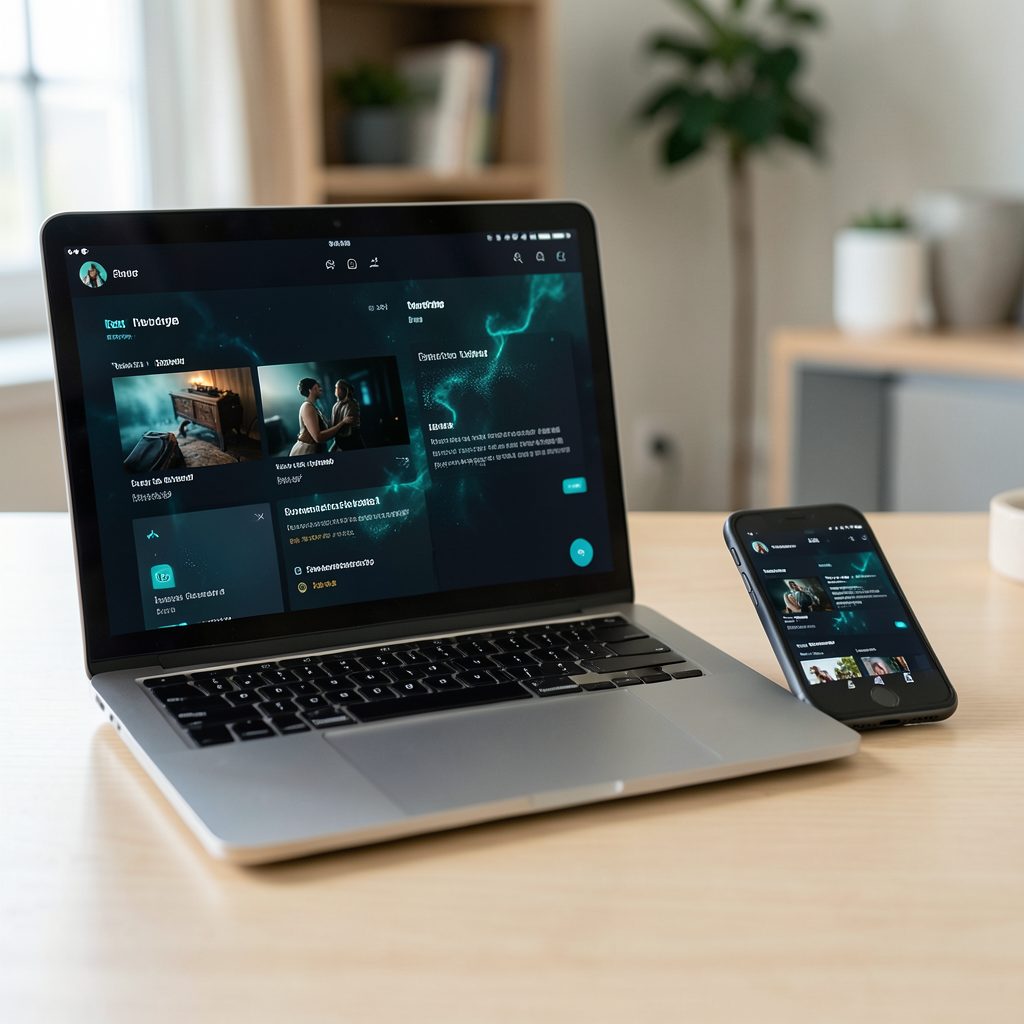
Stream Popcorn Time on PS5 With Media Server Apps
Popcorn Time does not have a standard, official PlayStation 5 application. That means you generally cannot install it from the PlayStation Store and start watching directly. The practical workaround is to use a computer as a media server, then open the stored video files through a compatible app on the PS5.
This arrangement is useful for Australian households where the television is connected to the console, while the laptop or desktop sits elsewhere on the home network. It can also provide a smoother living-room setup than trying to use an unsupported browser, although the source of the media and your rights to watch it still matter.
What the PlayStation 5 Can Actually Play
The PS5 includes a Media Player application that can access supported files from a USB drive or a compatible network media server. It is designed for ordinary video, music and image playback rather than running Android applications, Windows programs or unofficial streaming clients. As a result, a Popcorn Time installer cannot simply be copied to the console.
A media server changes the role of Popcorn Time. Instead of asking the PS5 to run the application, the computer handles the software and makes selected files available over your home network. The console then behaves like a network player. This distinction is important because many guides describe “streaming Popcorn Time to PS5” when they actually mean playing media served by another device.
Plex, Jellyfin and Emby are the most practical options. Plex and Emby usually have a more polished television interface, while Jellyfin is open-source and gives you greater control over the server. Availability and app support can change, so check the PlayStation Store in Australia before choosing a platform.
Pick A Server That Suits Your Home
Plex is often the simplest choice for a family room setup. Install Plex Media Server on a Windows, macOS or Linux computer, point it towards your authorised video library, and install the Plex client on the PS5. The server scans the folders and presents films and television episodes with artwork, descriptions and playback controls.
Jellyfin is attractive if you prefer a self-hosted service without relying heavily on a commercial account. It may require more manual configuration, particularly when setting up user access, metadata and remote features. Emby sits between the two, with a familiar interface and broad device support. For playback inside your home, all three can work well when the network and video formats are suitable.
A media server is not a magic bridge for every Popcorn Time stream. It normally serves files that exist on your computer, not a live stream from an unsupported application. Some versions of Popcorn Time use temporary downloads or cached files, and their location can change. Only add files you have legally obtained or are otherwise authorised to use.
Prepare The Computer And Library
Install the selected server on a computer that can remain switched on while you watch. A desktop connected by Ethernet is ideal, but a modern laptop on reliable Wi-Fi can also work. Create clear folders for films and television shows, then use simple file names such as “Film Name (2024).mp4” or “Series Name - S01E01.mkv”.
The server should be allowed through the computer’s firewall on your private home network. During setup, select the private or home network profile rather than opening access to public networks. Give the server only the permissions it needs, and use a strong account password if the software supports user profiles.
The video format affects whether the computer must convert the file while playing. H.264 video with AAC or standard Dolby audio in an MP4 or compatible MKV container is commonly easy for modern devices. High-bitrate 4K files, unusual subtitles and less common audio formats may force transcoding, which can strain an older computer.
For Australian homes, this is especially relevant when the server is connected through Wi-Fi in a back room while the PS5 is near the television in a Sydney or Melbourne apartment. NBN speeds affect internet streaming, but local playback depends mainly on your router, signal strength and internal network traffic.
Install And Connect On The PS5
On the PS5, open the Media section and search the PlayStation Store for the client associated with your server. Install Plex, Emby or another supported application, then sign in using the same account or local details configured on the computer. The server and console must be connected to the same home network for the simplest discovery process.
If the server does not appear, verify that both devices are using the same router rather than separate guest networks. A PS5 connected to Ethernet and a laptop connected to 5 GHz Wi-Fi can communicate normally, provided the router permits local device discovery. Guest Wi-Fi often blocks that communication by design.
Open the library, select a title and test a short section before settling in for a full film. Check picture quality, subtitles, audio output and whether the server begins transcoding. The PS5 can output surround sound to a compatible television or sound system, but the result depends on the source file, the server’s settings and your HDMI equipment.
If your television is the main screen and the console is already installed, this setup avoids moving an HDMI cable between devices. It is also more practical than relying on AirPlay or Chromecast, because the PS5 does not function as a universal AirPlay receiver and does not offer the same Chromecast receiving experience as many smart TVs.
Deal With Popcorn Time Files Carefully
Popcorn Time forks can behave differently. Some offer catalogue browsing and playback through peer-to-peer sources, while others use a local cache or temporary download directory. A media server may detect a completed file in that directory, but it may not detect an active stream, and temporary files can disappear before the server finishes scanning them.
Do not assume that a VPN makes every use lawful. In Australia, copyright law still applies when a VPN is enabled, and disguising an IP address does not create permission to access unauthorised films or programmes. Use Popcorn Time-related software only with content you are entitled to view, such as public-domain works, your own recordings or properly licensed material.
It is also sensible to examine the security of any fork before installing it. Unofficial builds can include aggressive advertising, unwanted installers or outdated components. Avoid entering payment details into an unverified application, keep your operating system updated and scan downloaded installers with reputable security software.
The same media-server method can be used with legitimate downloads and home recordings. If you already use local files from discs, a camera or an authorised service, the server provides a convenient catalogue without making the PS5 responsible for unsupported software.
Improve Playback Across Australian Networks
For dependable playback, connect the computer or network-attached storage device to the router with Ethernet where possible. This reduces interruptions when a large file is being streamed to the console. If Ethernet is impractical, place the router in an open central position and use the less congested 5 GHz band within the same room or nearby area.
A basic 1080p film generally places modest demands on a modern home network, while a high-bitrate 4K file can expose weak Wi-Fi quickly. Households in Brisbane, Perth or Adelaide may also notice performance changes when several people are using video calls, cloud backups and streaming services at the same time. Local network playback avoids an internet data charge, but it still consumes router and computer resources.
If your computer cannot decode a file smoothly, enable hardware acceleration in the server when supported. Lowering the streaming quality can help, but it may reduce image detail. Direct Play is preferable when the PS5 supports the file because the server sends the original video instead of converting it in real time.
Subtitle compatibility deserves its own check. External SRT files with matching names are commonly recognised, while embedded subtitle tracks may behave differently depending on the server and format. Set the preferred subtitle language in the server application, then confirm it from the PS5 playback menu.
Fix Common Connection And Playback Problems
When the library is empty, rescan the folders and check that the server account has permission to read them. Incorrect folder categories can also cause trouble: a film placed in a television folder may be ignored or displayed with the wrong metadata. Removing unusual punctuation from a filename can help the server identify it correctly.
Buffering usually points to weak Wi-Fi, excessive transcoding or a computer that is sleeping. Keep the computer awake during playback and inspect the server dashboard to see whether the video is being converted. Moving the router, using Ethernet or selecting a lower-quality stream can resolve the issue without reinstalling the application.
If the PS5 client refuses to connect, restart the server and console, then confirm that the firewall still allows local traffic. Telstra, Optus and other Australian internet services may provide routers with isolation settings that prevent devices from seeing one another. Disable client isolation only on your private network, never on public Wi-Fi.
Audio problems can result from a mismatch between the file’s codec and the television or soundbar. Try a version with AAC or AC3 audio, turn on server-side audio conversion, or connect the PS5 directly to the display before routing sound through other equipment. For television-specific playback ideas, this Vizio TV setup guide explains a comparable approach using a compatible display and media source.
Keep The Setup Private And Manageable
A home media server should stay private unless you have a clear reason to enable remote access. Turn off remote streaming if you only watch at home, use a unique password and review which devices are signed in. Remote access exposes the server to the wider internet and creates additional security and legal considerations.
Keep the server application, PS5 system software and computer operating system updated. Back up important personal recordings separately from the media library, since a corrupted drive or accidental folder change can remove files from the catalogue. Avoid giving server software administrator privileges unless installation specifically requires them.
For a shared household, create separate profiles where available. This keeps watch history and recommendations organised and prevents children from opening material that is unsuitable for them. Australian classification labels can help with household decisions, but they are not a substitute for parental controls or checking the source of a file.
Once configured, the arrangement is straightforward: the computer stores and serves authorised media, the server app organises it, and the PS5 provides the living-room playback interface. That approach is more stable than searching for an unofficial PS5 build and works with a broad range of personal media.
Set up a trusted Plex, Jellyfin or Emby server, test it with a legally obtained video, and adjust the network before adding a larger library. This gives your PlayStation 5 a reliable media-centre role while keeping software, privacy and Australian copyright responsibilities in view.