
Setting up Popcorn Time on a Synology NAS for home streaming
A Synology DiskStation can become a useful media hub for a household, storing legitimate video files and serving them to televisions, phones, tablets and streaming sticks. Its low-power design, scheduled downloads and central storage make it appealing for home entertainment, especially where several people want access to the same library.
Popcorn Time is a different proposition. It is associated with torrent-based streaming, and the legality of the content depends on copyright ownership, licensing and local law. In Australia, watching or sharing unauthorised copies can create legal and security risks, so a DiskStation should be configured carefully and used only with content you are entitled to access. The same hardware can also run lawful media-server software such as Jellyfin or Plex.
Understand what the DiskStation provides
A Synology NAS is primarily a network storage computer. It can hold video files, manage folders, run background services and make media available through compatible applications. It does not automatically turn every streaming application into a native Synology package, and many Popcorn Time forks have no reliable DSM support.
The exact experience depends on the DiskStation model, DSM version, processor architecture and available memory. An Intel-based Plus model generally offers more flexibility than an entry-level ARM unit, while older devices may struggle with real-time video conversion. Direct playback is usually easier than transcoding because the NAS can send a compatible file without changing its format.
This distinction matters when planning a home streaming setup. If a television, Chromecast or mobile device cannot decode the video, the server may need to transcode it. That can consume considerable CPU resources, cause buffering and affect other users who are watching content at the same time.
Check Australian legal and network requirements
Australian copyright law applies to content accessed through a NAS just as it applies to content watched on a computer. A torrent client may upload pieces of a file while it downloads, which can create additional exposure when the material is not licensed. A VPN can improve privacy on an untrusted network, but it does not make unauthorised distribution lawful or guarantee anonymity.
Before installing any fork, check where its media comes from, who maintains the project and whether its terms are suitable for your household. Forks can disappear, change domains or bundle unwanted software. For changing project details and compatibility updates, consult the site's latest Popcorn Time news rather than relying on an old download page or forum post.
Your home connection also affects performance. NBN speeds in suburbs around Sydney, Melbourne, Brisbane and Perth vary by technology and congestion, and Wi-Fi conditions can be just as important as the advertised plan. A wired link from the DiskStation to the router is preferable, while a 5 GHz or Wi-Fi 6 connection is usually better for a nearby television than a crowded 2.4 GHz network.
Choose a supported installation method
Synology’s Package Center is the safest starting point because packages there are designed for DSM and can receive managed updates. Popcorn Time is not consistently available as an official Synology package, so an apparently convenient third-party package should be treated with suspicion. A package that requests broad administrator permissions or contains an unfamiliar downloader deserves particular caution.
Some experienced NAS owners use Container Manager to run applications in isolated containers. This can be a practical way to deploy a legitimate media server when the project publishes a trustworthy container image and clear instructions. Containerisation does not remove legal responsibility, and it does not make an unverified image safe. Use a documented source, pin or review image versions, and avoid images that hide their network behaviour.
A safer approach is to use the DiskStation for personal media and install a recognised media-management service. Jellyfin, Plex and Kodi-based arrangements can organise files that you own or have permission to use. If a lawful application supports a Synology container, follow its current documentation rather than copying compose files from an anonymous social-media post.
Prepare DSM and storage before streaming
Create a dedicated shared folder for media instead of placing video files inside system directories. Use clear folders such as Movies, Television, Home Videos and Subtitles, and apply permissions so that the media service can read what it needs without receiving full access to every NAS file. A separate account for the service is preferable to using the DSM administrator account.
Enable DSM updates, install security fixes and activate two-factor authentication for administrator accounts. Disable unnecessary services, including remote access features that are not required. QuickConnect and port forwarding can be convenient, but exposing a NAS directly to the public internet increases the attack surface. For home playback, local network access is usually enough.
Storage planning is easy to underestimate. High-bitrate 4K files occupy much more space than standard-definition television, and duplicate downloads can fill a volume rapidly. Keep the NAS protected by a tested backup, ideally with a second local copy or an offline copy. RAID can help with drive failure, but it is not a substitute for backup and will not protect against accidental deletion or ransomware.
Connect televisions and mobile devices
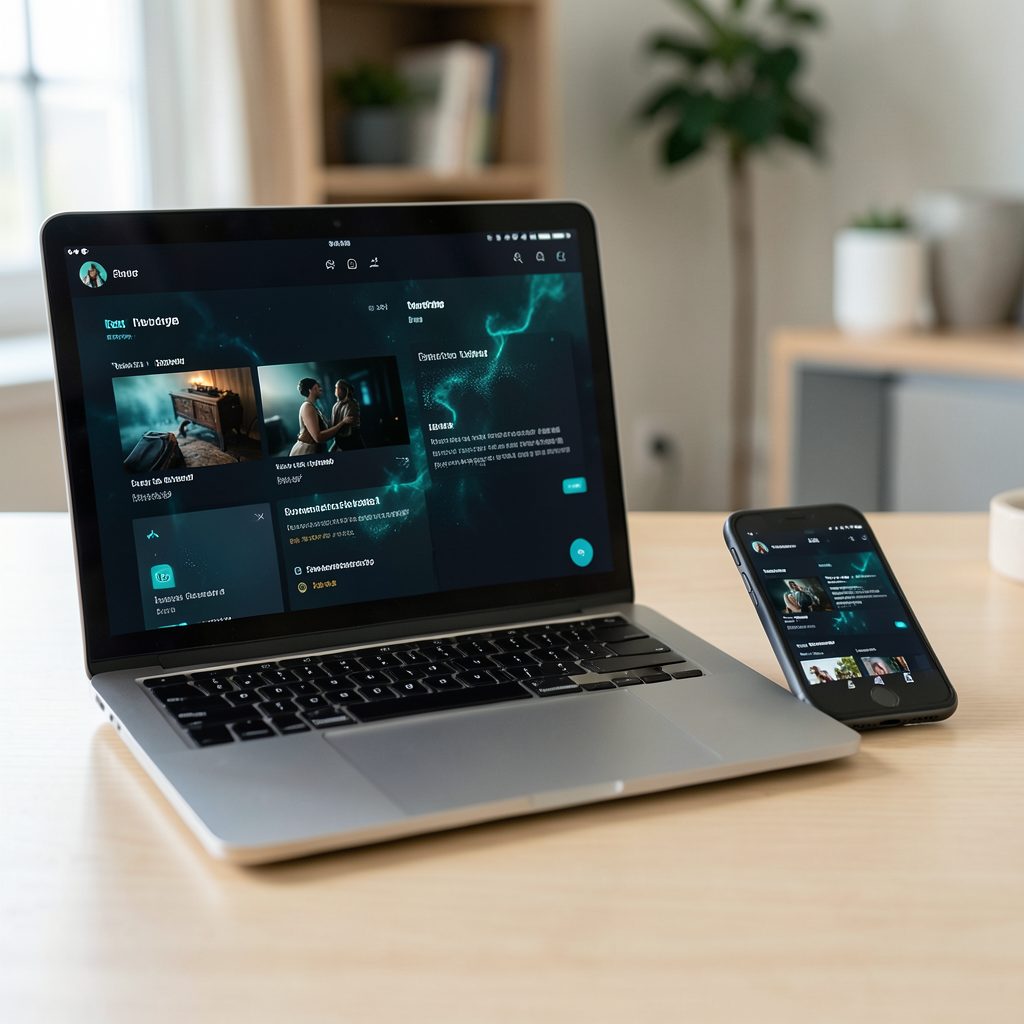
Once the media service is running, playback can be arranged through a browser, a dedicated application, a compatible smart-TV client or a streaming device. Chromecast and AirPlay may work when the server and receiving device are on the same home network, although support varies between apps and file formats. Keep the DiskStation, router and television on the same trusted network unless the application has a well-designed remote-access method.
Australian households often combine a smart television with a Chromecast, Apple TV or gaming console. Testing one device first is better than trying to configure every screen at once. A television in a Melbourne apartment may be close to the router, while a garage or second-storey room in a Brisbane house may need Ethernet, a mesh node or a stronger access point.
When playback stops to buffer, check whether the file is being transcoded. Subtitles, uncommon audio formats and high-resolution video can trigger conversion even when the picture appears compatible. Choosing common formats such as H.264 video with AAC or AC-3 audio, where appropriate and legally sourced, can reduce the workload on the NAS.
Troubleshoot buffering and installation errors
A failed installation may be caused by an incompatible CPU architecture, an outdated DSM release, insufficient memory or a container image that no longer exists. Review the application’s logs and compare its requirements with the exact DiskStation model. Do not repeatedly reinstall unknown packages, as that can leave behind services, scheduled tasks or credentials that are difficult to identify.
For buffering, start with simple tests. Play a known local file through a wired connection, check CPU and memory usage in Resource Monitor, and compare direct-play results with transcoded playback. If the wired test works but Wi-Fi does not, improve the wireless link before changing application settings. If CPU usage reaches its limit during conversion, use a lower-resolution file or a server with hardware-transcoding support.
Torrent-related applications can also fail because trackers, indexes or peer connections become unavailable. That is a weakness of the service ecosystem rather than necessarily a NAS fault. Avoid installing browser extensions, certificates or “codec packs” offered by unofficial troubleshooting pages. These are common places for malware and credential theft.
Practical choices for an Australian home
A reliable setup should prioritise privacy, maintainability and lawful access over the number of features displayed by a streaming fork. These choices can help keep the DiskStation stable:
- Use a wired Ethernet connection between the NAS and router whenever possible.
- Store only licensed, owned or permission-based video in the media library.
- Prefer a maintained Synology package or a documented container from a reputable project.
- Keep DSM, applications, containers and router firmware updated.
- Back up important files separately from the DiskStation’s main storage volume.
Subscription services are also part of the local streaming market. ABC iview, SBS On Demand, Stan, Binge and other platforms may provide licensed alternatives for Australian viewers, while broadcast content and sports rights can change from season to season. A household may find that a NAS works best as a private library for home videos, purchased media and openly licensed files rather than as a replacement for every commercial service.
Keep remote access limited and deliberate
Remote streaming requires extra care. If family members need access while travelling between Adelaide, Canberra or the Gold Coast, use a reputable application’s authenticated remote-access feature or a properly configured private network. Avoid opening DSM administration ports to the internet, and never share an administrator login with a television or mobile app.
Review user accounts periodically and remove old devices. Set strong, unique passwords, enable two-factor authentication where available and monitor unusual login activity. A VPN may be useful when connecting to your home network from public Wi-Fi, such as at a hotel or airport, but it should be treated as a secure connection method rather than a licence to access copyrighted material.
A DiskStation can provide smooth, centralised home playback when its role is kept clear: store lawful media, use maintained software, protect the network and match video formats to the capabilities of the NAS. With those safeguards in place, households can enjoy convenient streaming across televisions and mobile devices without making the storage server unnecessarily exposed. Review the current software documentation, test one local playback path and build the system around content you are authorised to use.