


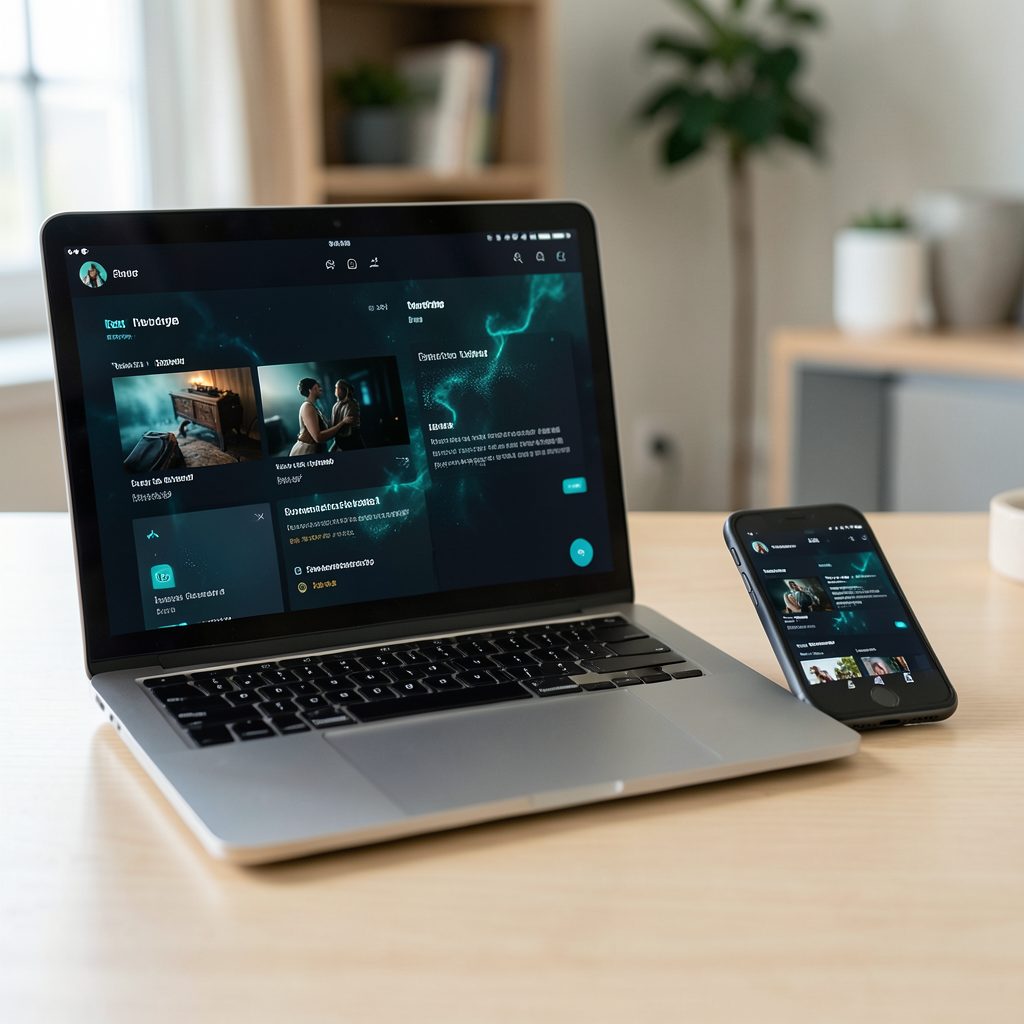
Popcorn Time shows no torrents: how Australians can fix it
There's nothing more frustrating than settling in for a movie night, opening Popcorn Time, and seeing the dreaded message that no torrents are available for any title. The catalogue looks full, posters and descriptions load normally, but every film you tap returns an empty result. For many viewers across Sydney, Melbourne, and Brisbane, this issue tends to appear out of nowhere and seems impossible to resolve without deleting and reinstalling the app from scratch.
In Australia, where NBN fibre-to-the-premises and HFC connections have become the everyday standard for households, intermittent peer-to-peer problems are surprisingly common. Local ISPs occasionally throttle or shape BitTorrent traffic during peak evening hours, and that shaping often shows up in Popcorn Time as a complete absence of peers rather than a slow buffer. Add the country's data retention regime and the regional quirks of content licensing, and the picture gets a little more complex than a simple network reset.
The good news is that almost every "no torrents available" case can be traced to a handful of causes: a stalled P2P engine, an outdated client build, an overzealous firewall, or a VPN tunnel that isn't routing properly. The guide below walks through the practical steps Australian viewers can take to restore a healthy library of streams, with notes on the regional factors that sometimes make the problem stick around longer than expected.
Why Popcorn Time shows no torrents in the first place
Popcorn Time doesn't host any video files itself. It works by reaching out across the BitTorrent network and pulling small peer lists from public trackers for each title in its catalogue. When every movie comes back empty, the client is essentially failing to talk to those trackers, or it is finding peers but failing to negotiate a handshake with any of them.
Several layers can break this conversation. The most common culprit is a sudden change in the local network, such as a new router, a refreshed modem from a Telstra or Optus installation, or a change in DNS configuration. The second is the Popcorn Time build itself, which has historically been distributed through several unofficial forks that quietly stop receiving updates. And the third, increasingly common in Australia, is the way some residential ISPs route or block peer-to-peer packets, especially when the connection runs over certain NBN technologies that prioritise downloads from Australian mirrors.
It's worth noting that an empty catalogue can look identical to a slow one. If a movie opens, shows a loading spinner, and then returns to the selection screen, that points to peer negotiation rather than a tracker outage. If the catalogue never even spins, the issue is more likely with the app's connection to its own API or with metadata that hasn't finished indexing yet.
Network tweaks and VPN routing for Australian users
The first thing to try, before changing anything inside Popcorn Time, is to confirm the underlying connection is healthy. Open a browser, load a few sites, and run a quick speed test through a server in Sydney or another capital city. If general browsing is fast but Popcorn Time is silent, the issue almost always lies in how peer-to-peer traffic is being handled rather than in the wider internet connection.
Many Australian viewers route their traffic through a VPN for privacy reasons, partly in response to the country's data retention laws and partly because it helps bypass throttling on certain plans. If you already use a VPN, try switching to a server located in a different Australian city, or temporarily disconnect the VPN entirely to see whether streams reappear. A misconfigured tunnel, one that blocks outgoing UDP traffic for instance, will silently break Popcorn Time's ability to locate peers. The process for restoring the connection on a fresh install is covered in the detailed walkthrough, and most of those steps also apply when torrents fail to appear.
If you don't use a VPN and your streams are missing, a brief experiment with a reputable provider connected to a Brisbane or Perth endpoint often confirms whether the ISP is the problem. Some Australian ISPs have been known to throttle BitTorrent handshake packets specifically, and that throttling doesn't always show up on a standard speed test, so a quick VPN trial can be more revealing than any benchmark.
Updating the client or switching to a maintained fork
Because Popcorn Time lives in a legal grey area, the original project shut down years ago and a series of community forks have taken over maintenance. If your build is more than a few months old, its embedded tracker list and API endpoints may be pointing at servers that no longer respond. That's a classic cause of an entirely empty catalogue even when the underlying network is fine.
Most maintained forks publish a stable channel and a beta channel inside the app. Switching to beta and restarting often picks up new tracker lists, and it can also restore subtitle providers that quietly stop working when their host domains change. If beta doesn't help, it's worth checking which fork you have installed: Butter, Popcorntime.sh, and a few regional builds all behave slightly differently, and one of them is generally more reliable on Australian networks than the others. The site tracks these builds and updates in its regularly refreshed FAQ page, which is the quickest place to confirm whether your current version is still being patched.
After updating, restart the device rather than just relaunching the app. Some forks hold old DNS entries in memory, and a full restart is the simplest way to flush them before you start a fresh search.
Clearing cache, folders, and stuck settings
Long-term Popcorn Time users sometimes find that the app's internal cache grows large enough to slow down its catalogue scans. On Windows, the cache lives inside %appdata%\Popcorn Time; on macOS, it sits under ~/Library/Application Support. On Android builds, clearing the app's storage from system settings usually does the trick. Removing that folder forces the client to rebuild its metadata, which often resolves the "no torrents available" message on titles that previously loaded fine.
It's also worth checking the in-app settings panel. Some forks let you set a custom DNS provider or a hardcoded tracker list, and either of those can quietly break the connection. Switching DNS back to automatic, restoring the default tracker list, and disabling any custom proxy settings are all safe resets that don't risk your library or watch history. After making those changes, restart the app and let it sit on the home screen for a minute or two while it reindexes the catalogue. Patience here pays off, since the first few searches after a reset often return empty results while the new index builds in the background.
Regional quirks that affect torrent availability in Australia
Australian viewers run into a handful of unique issues that rarely affect users in larger torrent hubs such as Berlin or Amsterdam. The country has fewer local peers in absolute terms, simply because the population is smaller and more geographically spread across cities like Adelaide, Hobart, and Darwin. That sparsity means a popular overseas title can sometimes take longer to find an Australian swarm, and on quieter titles, such as niche documentaries, older films, and foreign-language cinema, you may only ever see a handful of peers globally.
Local legislation also shapes the experience. Australia's copyright safe harbour provisions don't extend to personal streaming in the way some users assume, and rights holders regularly send takedown notices to ISPs. Some ISPs respond by quietly throttling peer-to-peer for affected customers, especially during evening prime time when household bandwidth is shared between streaming, gaming, and video calls. NBN congestion during those peak hours can also delay handshakes enough that Popcorn Time gives up before connecting.
Time zones play a subtle role too. When it's 9pm in Sydney, most of Europe is asleep, so the global peer pool for any given title is roughly the Americas plus Australia. The smallest titles can look completely empty simply because the rest of the English-speaking world has logged off for the night. Patience, a well-configured VPN, and a current build are usually enough to bridge those gaps.
Practical steps to restore your streams
For most people, a quick checklist solves the problem within ten minutes:
- Restart the device, not just the app, to flush DNS and network state
- Update to the latest stable build of your chosen Popcorn Time fork
- Clear the app's cache folder and let it rebuild its catalogue index
- Test with and without your VPN, using a server in a different Australian city
- Confirm your router or firewall isn't blocking outgoing peer-to-peer traffic
If the catalogue is still empty after running through that list, the most common remaining cause is an outdated fork that no longer maintains its tracker list. In that case, switching to a different maintained build, or moving to the latest beta, almost always brings streams back.
If you've worked through the fixes above and Popcorn Time still refuses to find any peers, drop a comment below with the device you're using, the fork version, and your ISP. Australian setups vary widely between metro NBN and regional satellite services, and a few extra details often point to the right next step. The site also keeps its troubleshooting tips current alongside every major release, so checking back after each fork update is a good habit to keep the catalogue healthy.